
Description
Coconut Kernels,coconut kernels Kerala, coconut kernels Thiruvananthapuram, coconut kernels Neyyattinkara, coconut kernels Varkala, coconut kernels Attingal, coconut kernels Kollam, coconut kernels Karunagappally, coconut kernels Punalur, coconut kernels Paravur, coconut kernels Pathanamthitta, coconut kernels Thiruvalla, coconut kernels Adoor, coconut kernels Pandalam, coconut kernels Alappuzha, coconut kernels Cherthala, coconut kernels Kayamkulam, coconut kernels Haripad, coconut kernels Kottayam, coconut kernels Changanassery, coconut kernels Pala, coconut kernels Vaikom, coconut kernels Idukki, coconut kernels Thodupuzha, coconut kernels Munnar, coconut kernels Kattappana, coconut kernels Kochi, coconut kernels Aluva, coconut kernels Perumbavoor, coconut kernels Muvattupuzha, coconut kernels Kothamangalam, coconut kernels Thrissur, coconut kernels Guruvayur, coconut kernels Irinjalakuda, coconut kernels Chalakkudy, coconut kernels Palakkad, coconut kernels Ottapalam, coconut kernels Shoranur, coconut kernels Chittur, coconut kernels Malappuram, coconut kernels Manjeri, coconut kernels Tirur, coconut kernels Ponnani, coconut kernels Perinthalmanna, coconut kernels Kozhikode, coconut kernels Vadakara, coconut kernels Koyilandy, coconut kernels Ramanattukara, coconut kernels Kalpetta, coconut kernels Sulthan Bathery, coconut kernels Mananthavady, coconut kernels Kannur, coconut kernels Thalassery, coconut kernels Payyannur, coconut kernels Mattannur, coconut kernels Kasaragod, coconut kernels Kanhangad, coconut kernels Nileshwar, coconut kernels online store, coconut kernels price online, coconut kernels home delivery, coconut kernels store near me, coconut kernels wholesale supplier, coconut kernels wholesale price, coconut kernels discount offer, coconut kernels retail supplier, coconut kernels online shop, coconut kernels distributor, coconut kernels for weight loss, best deals on coconut kernels, bulk coconut kernels online, bulk coconut kernels supplier, bulk coconut kernels price, buy coconut kernels online, export quality coconut kernels, fresh coconut kernels online, gluten free coconut kernels, healthy coconut kernels snack, heart healthy coconut kernels, high protein coconut kernels, immunity boosting coconut kernels, keto friendly coconut kernels, natural coconut kernels food,roasted salted Coconut kernels nutritious coconut kernels snack, order coconut kernels online, organic coconut kernels online, premium coconut kernels online, raw coconut kernels online, roasted coconut kernels online, sliced coconut kernels, vegan coconut kernels, whole coconut kernels, organic premium coconut kernels, best quality coconut kernels, natural raw coconut kernels, roasted salted coconut kernels, jumbo size coconut kernels, roasted unsalted coconut kernels, Coconut kernels, Coconut kernels for energy, Organic coconut pieces, Heart-healthy coconut bites, Smoothie-ready coconut chunks, Coconut kernels for skin, High-fiber coconut pieces, Coconut for digestion, Coconut kernels for hair, Edible coconut India, Coconut for immunity, Roasted coconut kernels, Daily wellness coconut, Coconut for metabolism, Premium coconut pieces, Coconut for natural energy, Culinary-use coconut, Coconut for detox, Soft-bite coconut snacks, Antioxidant coconut kernels, Coconut for vitalityAcross tropical coastal landscapes where swaying palms define the horizon and humid breezes carry the scent of salt and greenery, the inner white flesh of the mature drupe from these iconic trees has long been celebrated as a nourishing staple, a culinary treasure, and a symbol of abundance woven deeply into daily life, ritual, and regional identity. Carefully separated from its hard shell and thin brown skin, this firm yet tender interior offers a naturally sweet, mildly nutty flavor accompanied by a satisfying bite that can range from crisp and juicy when fresh to dense and creamy when dried, making it one of the most versatile plant-based ingredients found in traditional kitchens. For generations, households have relied on this wholesome food to enrich meals, not only because of its pleasant taste but also because of its impressive nutritional composition, which includes beneficial fats known for supporting sustained energy, moderate amounts of plant-derived protein, and dietary fiber that contributes to digestive comfort and overall balance. When grated finely, it transforms into delicate flakes that blend seamlessly into vegetable preparations, lentil stews, and spiced rice dishes, enhancing texture while subtly elevating flavor without overpowering the main ingredients; when ground into a paste with warm water, it yields a creamy extract that forms the base of numerous curries and gravies, lending body and smoothness while balancing aromatic spices such as turmeric, cumin, coriander, and chili. In sweet applications, its natural richness complements jaggery, cardamom, and roasted grains, creating desserts that are both comforting and festive, often prepared during celebrations, family gatherings, and religious ceremonies where food serves as an expression of gratitude and hospitality. The nutritional qualities of this plant food are noteworthy, as it contains medium-chain triglycerides that the body can convert into quick energy, supporting active lifestyles and providing a sense of satiety that helps regulate appetite; its mineral profile includes manganese, copper, iron, and magnesium, each playing roles in metabolic processes, antioxidant defense, and structural support for bones and connective tissue. Antioxidant compounds present within its matrix assist in protecting cells from oxidative stress, while its naturally occurring fats help in the absorption of fat-soluble vitamins from accompanying vegetables and spices, thereby enhancing the overall nutritional impact of a meal. In many coastal regions, it is considered indispensable, forming the backbone of daily cooking practices where freshly grated portions are added to nearly every savory dish, contributing not only flavor but also a creamy mouthfeel that softens the heat of chilies and harmonizes complex spice blends. When sliced thin and gently toasted, it develops a golden hue and releases an inviting aroma, adding crunch and depth to salads, baked goods, and snack mixtures; when dried and milled into flour, it becomes a valued ingredient in grain-free baking, offering structure and moisture to breads, pancakes, and confections while aligning with dietary patterns that limit refined grains. Its compatibility with plant-based and vegetarian cuisines has contributed to renewed global interest, as modern consumers seek minimally processed foods that provide both nourishment and culinary satisfaction without reliance on artificial additives. In beverage preparation, the creamy extract derived from this white flesh can be simmered gently to create a luscious base for soups or blended with fruits to craft smoothies that feel indulgent yet remain rooted in whole-food simplicity. Traditional preservation methods include drying thin strips under sunlight to extend shelf life, ensuring availability beyond the harvest season and allowing families to store a reliable source of nutrition for months.Economically, the cultivation and processing of these tropical fruits support millions of farmers and artisans, from those who climb tall trunks to harvest mature produce to those who skillfully separate the inner flesh and prepare it for local markets, thereby sustaining rural livelihoods and contributing to regional trade networks. Cultural symbolism surrounding this fruit is profound, often representing prosperity, purity, and auspicious beginnings, with its white interior frequently used in ceremonial offerings and festive decorations that underscore its role beyond mere sustenance. In holistic wellness traditions, oil extracted from the dried flesh has been employed for hair conditioning and skin nourishment, prized for its emollient properties and subtle fragrance, illustrating the multipurpose nature of this remarkable botanical resource. From a culinary science perspective, the balance of saturated and unsaturated fats within its composition influences texture and stability during cooking, enabling it to withstand moderate heat without losing structural integrity, which is why it performs so effectively in sautéing and baking applications. The fibrous content contributes to digestive regularity, while the natural sweetness reduces the need for excessive added sugars in dessert preparations, supporting mindful indulgence. As interest in sustainable agriculture grows, attention has turned to responsible cultivation practices that protect soil health, conserve water, and maintain biodiversity within palm groves, ensuring that future generations can continue to benefit from this nutrient-dense food source. In contemporary gastronomy, chefs experiment with innovative techniques such as fermenting grated portions to create tangy condiments or incorporating toasted flakes into savory crusts for roasted vegetables, showcasing its adaptability to evolving culinary trends.export quality Coconut kernels, Fitness enthusiasts appreciate its energy-providing fats that can support endurance activities, while home cooks value its ability to transform simple ingredients into satisfying meals with minimal effort. The creamy extract is often used to temper spicy dishes, creating a balanced sensory experience that delights the palate without overwhelming it, and its subtle sweetness pairs beautifully with tropical fruits like mango and pineapple in refreshing desserts. Storage considerations are straightforward: refrigeration preserves freshness for several days when kept airtight, while freezing grated portions extends usability for weeks, offering convenience for busy households. In baking, its flour alternative imparts moisture and a delicate crumb, enhancing cakes and cookies with a hint of natural sweetness; in savory snacks, toasted shards add crunch to trail mixes and spiced blends, delivering flavor complexity without artificial flavorings. Beyond nutrition and flavor, the environmental resilience of the palm tree itself, capable of thriving in sandy soils and saline conditions, underscores the sustainability potential of this crop when managed thoughtfully. Its byproducts, including husk fibers and shells, are repurposed into ropes, mats, fuel, and activated charcoal, minimizing waste and exemplifying circular resource use. Culinary traditions from coastal India to Southeast Asia, the Caribbean, and parts of Africa demonstrate the global embrace of this ingredient, each region interpreting it through distinct spice profiles and cooking methods while honoring its inherent qualities. The creamy extract thickens lentil stews in one culture, enriches seafood curries in another, and forms the base of chilled desserts elsewhere, yet in every context it remains synonymous with comfort and nourishment. Health-conscious consumers often integrate it into balanced meal plans, recognizing that moderate portions can contribute to satiety and sustained energy without excessive processing. Scientific studies exploring the metabolic effects of medium-chain fats have sparked further interest, though traditional communities have long understood its energizing properties through lived experience. The gentle sweetness and rich texture make it suitable for children and elders alike, bridging generational preferences and reinforcing its status as a family staple. Its integration into festive cuisine reinforces emotional connections, as the aroma of freshly grated portions roasting lightly in a pan evokes memories of shared meals and celebratory gatherings. In urban settings, packaged dried forms provide convenience, allowing modern consumers to enjoy traditional flavors despite fast-paced lifestyles, while artisanal producers continue to emphasize quality and minimal processing to retain authentic taste. As global culinary exchange accelerates, this tropical white flesh finds new expressions in fusion cuisine, plant-based ice creams, dairy alternatives, savory sauces, and even specialty beverages crafted by innovative mixologists. Despite evolving applications, its essence remains grounded in simplicity: a natural, nutrient-rich food derived from a resilient tree that has sustained communities for centuries. Through mindful cultivation, respectful processing, and creative culinary exploration, this humble yet extraordinary ingredient continues to nourish bodies, support livelihoods, and inspire gastronomic creativity across continents, embodying a harmonious blend of tradition, sustainability, and wholesome indulgence in every tender, creamy bite.Across tropical coastal landscapes where swaying palms define the horizon and humid breezes carry the scent of salt and greenery, the inner white flesh of the mature drupe from these iconic trees has long been celebrated as a nourishing staple, a culinary treasure, and a symbol of abundance woven deeply into daily life, ritual, and regional identity. Carefully separated from its hard shell and thin brown skin, this firm yet tender interior offers a naturally sweet, mildly nutty flavor accompanied by a satisfying bite that can range from crisp and juicy when fresh to dense and creamy when dried, making it one of the most versatile plant-based ingredients found in traditional kitchens. For generations, households have relied on this wholesome food to enrich meals, not only because of its pleasant taste but also because of its impressive nutritional composition, which includes beneficial fats known for supporting sustained energy, moderate amounts of plant-derived protein, and dietary fiber that contributes to digestive comfort and overall balance. When grated finely, it transforms into delicate flakes that blend seamlessly into vegetable preparations, lentil stews, and spiced rice dishes, enhancing texture while subtly elevating flavor without overpowering the main ingredients; when ground into a paste with warm water, it yields a creamy extract that forms the base of numerous curries and gravies, lending body and smoothness while balancing aromatic spices such as turmeric, cumin, coriander, and chili. In sweet applications, its natural richness complements jaggery, cardamom, and roasted grains, creating desserts that are both comforting and festive, often prepared during celebrations, family gatherings, and religious ceremonies where food serves as an expression of gratitude and hospitality. The nutritional qualities of this plant food are noteworthy, as it contains medium-chain triglycerides that the body can convert into quick energy, supporting active lifestyles and providing a sense of satiety that helps regulate appetite; its mineral profile includes manganese, copper, iron, and magnesium, each playing roles in metabolic processes, antioxidant defense, and structural support for bones and connective tissue. Antioxidant compounds present within its matrix assist in protecting cells from oxidative stress, while its naturally occurring fats help in the absorption of fat-soluble vitamins from accompanying vegetables and spices, thereby enhancing the overall nutritional impact of a meal. In many coastal regions, it is considered indispensable, forming the backbone of daily cooking practices where freshly grated portions are added to nearly every savory dish, contributing not only flavor but also a creamy mouthfeel that softens the heat of chilies and harmonizes complex spice blends. When sliced thin and gently toasted, it develops a golden hue and releases an inviting aroma, adding crunch and depth to salads, baked goods, and snack mixtures; when dried and milled into flour, it becomes a valued ingredient in grain-free baking, offering structure and moisture to breads, pancakes, and confections while aligning with dietary patterns that limit refined grains. Its compatibility with plant-based and vegetarian cuisines has contributed to renewed global interest, as modern consumers seek minimally processed foods that provide both nourishment and culinary satisfaction without reliance on artificial additives. In beverage preparation, the creamy extract derived from this white flesh can be simmered gently to create a luscious base for soups or blended with fruits to craft smoothies that feel indulgent yet remain rooted in whole-food simplicity. Traditional preservation methods include drying thin strips under sunlight to extend shelf life, ensuring availability beyond the harvest season and allowing families to store a reliable source of nutrition for months. Economically, the cultivation and processing of these tropical fruits support millions of farmers and artisans, from those who climb tall trunks to harvest mature produce to those who skillfully separate the inner flesh and prepare it for local markets, thereby sustaining rural livelihoods and contributing to regional trade networks. Cultural symbolism surrounding this fruit is profound, often representing prosperity, purity, and auspicious beginnings, with its white interior frequently used in ceremonial offerings and festive decorations that underscore its role beyond mere sustenance. In holistic wellness traditions, oil extracted from the dried flesh has been employed for hair conditioning and skin nourishment, prized for its emollient properties and subtle fragrance, illustrating the multipurpose nature of this remarkable botanical resource. From a culinary science perspective, the balance of saturated and unsaturated fats within its composition influences texture and stability during cooking, enabling it to withstand moderate heat without losing structural integrity, which is why it performs so effectively in sautéing and baking applications. The fibrous content contributes to digestive regularity, while the natural sweetness reduces the need for excessive added sugars in dessert preparations, supporting mindful indulgence. As interest in sustainable agriculture grows, attention has turned to responsible cultivation practices that protect soil health, conserve water, and maintain biodiversity within palm groves, ensuring that future generations can continue to benefit from this nutrient-dense food source. In contemporary gastronomy, chefs experiment with innovative techniques such as fermenting grated portions to create tangy condiments or incorporating toasted flakes into savory crusts for roasted vegetables, showcasing its adaptability to evolving culinary trends. Fitness enthusiasts appreciate its energy-providing fats that can support endurance activities, while home cooks value its ability to transform simple ingredients into satisfying meals with minimal effort. The creamy extract is often used to temper spicy dishes, creating a balanced sensory experience that delights the palate without overwhelming it, and its subtle sweetness pairs beautifully with tropical fruits like mango and pineapple in refreshing desserts. Storage considerations are straightforward: refrigeration preserves freshness for several days when kept airtight, while freezing grated portions extends usability for weeks, offering convenience for busy households. In baking, its flour alternative imparts moisture and a delicate crumb, enhancing cakes and cookies with a hint of natural sweetness; in savory snacks, toasted shards add crunch to trail mixes and spiced blends, delivering flavor complexity without artificial flavorings. Beyond nutrition and flavor, the environmental resilience of the palm tree itself, capable of thriving in sandy soils and saline conditions, underscores the sustainability potential of this crop when managed thoughtfully. Its byproducts, including husk fibers and shells, are repurposed into ropes, mats, fuel, and activated charcoal, minimizing waste and exemplifying circular resource use. Culinary traditions from coastal India to Southeast Asia, the Caribbean, and parts of Africa demonstrate the global embrace of this ingredient, each region interpreting it through distinct spice profiles and cooking methods while honoring its inherent qualities. The creamy extract thickens lentil stews in one culture, enriches seafood curries in another, and forms the base of chilled desserts elsewhere, yet in every context it remains synonymous with comfort and nourishment. Health-conscious consumers often integrate it into balanced meal plans, recognizing that moderate portions can contribute to satiety and sustained energy without excessive processing. Scientific studies exploring the metabolic effects of medium-chain fats have sparked further interest, though traditional communities have long understood its energizing properties through lived experience. The gentle sweetness and rich texture make it suitable for children and elders alike, bridging generational preferences and reinforcing its status as a family staple. Its integration into festive cuisine reinforces emotional connections, as the aroma of freshly grated portions roasting lightly in a pan evokes memories of shared meals and celebratory gatherings. In urban settings, packaged dried forms provide convenience, allowing modern consumers to enjoy traditional flavors despite fast-paced lifestyles, while artisanal producers continue to emphasize quality and minimal processing to retain authentic taste. As global culinary exchange accelerates, this tropical white flesh finds new expressions in fusion cuisine, plant-based ice creams, dairy alternatives, savory sauces, and even specialty beverages crafted by innovative mixologists. Despite evolving applications, its essence remains grounded in simplicity: a natural, nutrient-rich food derived from a resilient tree that has sustained communities for centuries. Through mindful cultivation, respectful processing, and creative culinary exploration, this humble yet extraordinary ingredient continues to nourish bodies, support livelihoods, and inspire gastronomic creativity across continents, embodying a harmonious blend of tradition, sustainability, and wholesome indulgence in every tender, creamy bite.
Across tropical coastal landscapes where swaying palms define the horizon and humid breezes carry the scent of salt and greenery, the inner white flesh of the mature drupe from these iconic trees has long been celebrated as a nourishing staple, a culinary treasure, and a symbol of abundance woven deeply into daily life, ritual, and regional identity. Carefully separated from its hard shell and thin brown skin, this firm yet tender interior offers a naturally sweet, mildly nutty flavor accompanied by a satisfying bite that can range from crisp and juicy when fresh to dense and creamy when dried, making it one of the most versatile plant-based ingredients found in traditional kitchens. For generations, households have relied on this wholesome food to enrich meals, not only because of its pleasant taste but also because of its impressive nutritional composition, which includes beneficial fats known for supporting sustained energy, moderate amounts of plant-derived protein, and dietary fiber that contributes to digestive comfort and overall balance. When grated finely, it transforms into delicate flakes that blend seamlessly into vegetable preparations, lentil stews, and spiced rice dishes, enhancing texture while subtly elevating flavor without overpowering the main ingredients; when ground into a paste with warm water, it yields a creamy extract that forms the base of numerous curries and gravies, lending body and smoothness while balancing aromatic spices such as turmeric, cumin, coriander, and chili. In sweet applications, its natural richness complements jaggery, cardamom, and roasted grains, creating desserts that are both comforting and festive, often prepared during celebrations, family gatherings, and religious ceremonies where food serves as an expression of gratitude and hospitality. The nutritional qualities of this plant food are noteworthy, as it contains medium-chain triglycerides that the body can convert into quick energy, supporting active lifestyles and providing a sense of satiety that helps regulate appetite; its mineral profile includes manganese, copper, iron, and magnesium, each playing roles in metabolic processes, antioxidant defense, and structural support for bones and connective tissue. Antioxidant compounds present within its matrix assist in protecting cells from oxidative stress, while its naturally occurring fats help in the absorption of fat-soluble vitamins from accompanying vegetables and spices, thereby enhancing the overall nutritional impact of a meal. In many coastal regions, it is considered indispensable, forming the backbone of daily cooking practices where freshly grated portions are added to nearly every savory dish, contributing not only flavor but also a creamy mouthfeel that softens the heat of chilies and harmonizes complex spice blends. When sliced thin and gently toasted, it develops a golden hue and releases an inviting aroma, adding crunch and depth to salads, baked goods, and snack mixtures; when dried and milled into flour, it becomes a valued ingredient in grain-free baking, offering structure and moisture to breads, pancakes, and confections while aligning with dietary patterns that limit refined grains. Its compatibility with plant-based and vegetarian cuisines has contributed to renewed global interest, as modern consumers seek minimally processed foods that provide both nourishment and culinary satisfaction without reliance on artificial additives. In beverage preparation, the creamy extract derived from this white flesh can be simmered gently to create a luscious base for soups or blended with fruits to craft smoothies that feel indulgent yet remain rooted in whole-food simplicity. Traditional preservation methods include drying thin strips under sunlight to extend shelf life, ensuring availability beyond the harvest season and allowing families to store a reliable source of nutrition for months. Economically, the cultivation and processing of these tropical fruits support millions of farmers and artisans, from those who climb tall trunks to harvest mature produce to those who skillfully separate the inner flesh and prepare it for local markets, thereby sustaining rural livelihoods and contributing to regional trade networks. Cultural symbolism surrounding this fruit is profound, often representing prosperity, purity, and auspicious beginnings, with its white interior frequently used in ceremonial offerings and festive decorations that underscore its role beyond mere sustenance. In holistic wellness traditions, oil extracted from the dried flesh has been employed for hair conditioning and skin nourishment, prized for its emollient properties and subtle fragrance, illustrating the multipurpose nature of this remarkable botanical resource. From a culinary science perspective, the balance of saturated and unsaturated fats within its composition influences texture and stability during cooking, enabling it to withstand moderate heat without losing structural integrity, which is why it performs so effectively in sautéing and baking applications. The fibrous content contributes to digestive regularity, while the natural sweetness reduces the need for excessive added sugars in dessert preparations, supporting mindful indulgence. As interest in sustainable agriculture grows, attention has turned to responsible cultivation practices that protect soil health, conserve water, and maintain biodiversity within palm groves, ensuring that future generations can continue to benefit from this nutrient-dense food source. In contemporary gastronomy, chefs experiment with innovative techniques such as fermenting grated portions to create tangy condiments or incorporating toasted flakes into savory crusts for roasted vegetables, showcasing its adaptability to evolving culinary trends. Fitness enthusiasts appreciate its energy-providing fats that can support endurance activities, while home cooks value its ability to transform simple ingredients into satisfying meals with minimal effort. The creamy extract is often used to temper spicy dishes, creating a balanced sensory experience that delights the palate without overwhelming it, and its subtle sweetness pairs beautifully with tropical fruits like mango and pineapple in refreshing desserts. Storage considerations are straightforward: refrigeration preserves freshness for several days when kept airtight, while freezing grated portions extends usability for weeks, offering convenience for busy households. In baking, its flour alternative imparts moisture and a delicate crumb, enhancing cakes and cookies with a hint of natural sweetness; in savory snacks, toasted shards add crunch to trail mixes and spiced blends, delivering flavor complexity without artificial flavorings. Beyond nutrition and flavor, the environmental resilience of the palm tree itself, capable of thriving in sandy soils and saline conditions, underscores the sustainability potential of this crop when managed thoughtfully. Its byproducts, including husk fibers and shells, are repurposed into ropes, mats, fuel, and activated charcoal, minimizing waste and exemplifying circular resource use. Culinary traditions from coastal India to Southeast Asia, the Caribbean, and parts of Africa demonstrate the global embrace of this ingredient, each region interpreting it through distinct spice profiles and cooking methods while honoring its inherent qualities. The creamy extract thickens lentil stews in one culture, enriches seafood curries in another, and forms the base of chilled desserts elsewhere, yet in every context it remains synonymous with comfort and nourishment. Health-conscious consumers often integrate it into balanced meal plans, recognizing that moderate portions can contribute to satiety and sustained energy without excessive processing. Scientific studies exploring the metabolic effects of medium-chain fats have sparked further interest, though traditional communities have long understood its energizing properties through lived experience. The gentle sweetness and rich texture make it suitable for children and elders alike, bridging generational preferences and reinforcing its status as a family staple. Its integration into festive cuisine reinforces emotional connections, as the aroma of freshly grated portions roasting lightly in a pan evokes memories of shared meals and celebratory gatherings. In urban settings, packaged dried forms provide convenience, allowing modern consumers to enjoy traditional flavors despite fast-paced lifestyles, while artisanal producers continue to emphasize quality and minimal processing to retain authentic taste. As global culinary exchange accelerates, this tropical white flesh finds new expressions in fusion cuisine, plant-based ice creams, dairy alternatives, savory sauces, and even specialty beverages crafted by innovative mixologists. Despite evolving applications, its essence remains grounded in simplicity: a natural, nutrient-rich food derived from a resilient tree that has sustained communities for centuries. Through mindful cultivation, respectful processing, and creative culinary exploration, this humble yet extraordinary ingredient continues to nourish bodies, support livelihoods, and inspire gastronomic creativity across continents, embodying a harmonious blend of tradition, sustainability, and wholesome indulgence in every tender, creamy bite.
Across tropical coastal landscapes where swaying palms define the horizon and humid breezes carry the scent of salt and greenery, the inner white flesh of the mature drupe from these iconic trees has long been celebrated as a nourishing staple, a culinary treasure, and a symbol of abundance woven deeply into daily life, ritual, and regional identity. Carefully separated from its hard shell and thin brown skin, this firm yet tender interior offers a naturally sweet, mildly nutty flavor accompanied by a satisfying bite that can range from crisp and juicy when fresh to dense and creamy when dried, making it one of the most versatile plant-based ingredients found in traditional kitchens. For generations, households have relied on this wholesome food to enrich meals, not only because of its pleasant taste but also because of its impressive nutritional composition, which includes beneficial fats known for supporting sustained energy, moderate amounts of plant-derived protein, and dietary fiber that contributes to digestive comfort and overall balance. When grated finely, it transforms into delicate flakes that blend seamlessly into vegetable preparations, lentil stews, and spiced rice dishes, enhancing texture while subtly elevating flavor without overpowering the main ingredients; when ground into a paste with warm water, it yields a creamy extract that forms the base of numerous curries and gravies, lending body and smoothness while balancing aromatic spices such as turmeric, cumin, coriander, and chili. In sweet applications, its natural richness complements jaggery, cardamom, and roasted grains, creating desserts that are both comforting and festive, often prepared during celebrations, family gatherings, and religious ceremonies where food serves as an expression of gratitude and hospitality. The nutritional qualities of this plant food are noteworthy, as it contains medium-chain triglycerides that the body can convert into quick energy, supporting active lifestyles and providing a sense of satiety that helps regulate appetite; its mineral profile includes manganese, copper, iron, and magnesium, each playing roles in metabolic processes, antioxidant defense, and structural support for bones and connective tissue. Antioxidant compounds present within its matrix assist in protecting cells from oxidative stress, while its naturally occurring fats help in the absorption of fat-soluble vitamins from accompanying vegetables and spices, thereby enhancing the overall nutritional impact of a meal. In many coastal regions, it is considered indispensable, forming the backbone of daily cooking practices where freshly grated portions are added to nearly every savory dish, contributing not only flavor but also a creamy mouthfeel that softens the heat of chilies and harmonizes complex spice blends. When sliced thin and gently toasted, it develops a golden hue and releases an inviting aroma, adding crunch and depth to salads, baked goods, and snack mixtures; when dried and milled into flour, it becomes a valued ingredient in grain-free baking, offering structure and moisture to breads, pancakes, and confections while aligning with dietary patterns that limit refined grains. Its compatibility with plant-based and vegetarian cuisines has contributed to renewed global interest, as modern consumers seek minimally processed foods that provide both nourishment and culinary satisfaction without reliance on artificial additives. In beverage preparation, the creamy extract derived from this white flesh can be simmered gently to create a luscious base for soups or blended with fruits to craft smoothies that feel indulgent yet remain rooted in whole-food simplicity. Traditional preservation methods include drying thin strips under sunlight to extend shelf life, ensuring availability beyond the harvest season and allowing families to store a reliable source of nutrition for months. Economically, the cultivation and processing of these tropical fruits support millions of farmers and artisans, from those who climb tall trunks to harvest mature produce to those who skillfully separate the inner flesh and prepare it for local markets, thereby sustaining rural livelihoods and contributing to regional trade networks. Cultural symbolism surrounding this fruit is profound, often representing prosperity, purity, and auspicious beginnings, with its white interior frequently used in ceremonial offerings and festive decorations that underscore its role beyond mere sustenance. In holistic wellness traditions, oil extracted from the dried flesh has been employed for hair conditioning and skin nourishment, prized for its emollient properties and subtle fragrance, illustrating the multipurpose nature of this remarkable botanical resource. From a culinary science perspective, the balance of saturated and unsaturated fats within its composition influences texture and stability during cooking, enabling it to withstand moderate heat without losing structural integrity, which is why it performs so effectively in sautéing and baking applications. The fibrous content contributes to digestive regularity, while the natural sweetness reduces the need for excessive added sugars in dessert preparations, supporting mindful indulgence. As interest in sustainable agriculture grows, attention has turned to responsible cultivation practices that protect soil health, conserve water, and maintain biodiversity within palm groves, ensuring that future generations can continue to benefit from this nutrient-dense food source. In contemporary gastronomy, chefs experiment with innovative techniques such as fermenting grated portions to create tangy condiments or incorporating toasted flakes into savory crusts for roasted vegetables, showcasing its adaptability to evolving culinary trends. Fitness enthusiasts appreciate its energy-providing fats that can support endurance activities, while home cooks value its ability to transform simple ingredients into satisfying meals with minimal effort. The creamy extract is often used to temper spicy dishes, creating a balanced sensory experience that delights the palate without overwhelming it, and its subtle sweetness pairs beautifully with tropical fruits like mango and pineapple in refreshing desserts. Storage considerations are straightforward: refrigeration preserves freshness for several days when kept airtight, while freezing grated portions extends usability for weeks, offering convenience for busy households. In baking, its flour alternative imparts moisture and a delicate crumb, enhancing cakes and cookies with a hint of natural sweetness; in savory snacks, toasted shards add crunch to trail mixes and spiced blends, delivering flavor complexity without artificial flavorings. Beyond nutrition and flavor, the environmental resilience of the palm tree itself, capable of thriving in sandy soils and saline conditions, underscores the sustainability potential of this crop when managed thoughtfully. Its byproducts, including husk fibers and shells, are repurposed into ropes, mats, fuel, and activated charcoal, minimizing waste and exemplifying circular resource use. Culinary traditions from coastal India to Southeast Asia, the Caribbean, and parts of Africa demonstrate the global embrace of this ingredient, each region interpreting it through distinct spice profiles and cooking methods while honoring its inherent qualities. The creamy extract thickens lentil stews in one culture, enriches seafood curries in another, and forms the base of chilled desserts elsewhere, yet in every context it remains synonymous with comfort and nourishment. Health-conscious consumers often integrate it into balanced meal plans, recognizing that moderate portions can contribute to satiety and sustained energy without excessive processing. Scientific studies exploring the metabolic effects of medium-chain fats have sparked further interest, though traditional communities have long understood its energizing properties through lived experience. The gentle sweetness and rich texture make it suitable for children and elders alike, bridging generational preferences and reinforcing its status as a family staple. Its integration into festive cuisine reinforces emotional connections, as the aroma of freshly grated portions roasting lightly in a pan evokes memories of shared meals and celebratory gatherings. In urban settings, packaged dried forms provide convenience, allowing modern consumers to enjoy traditional flavors despite fast-paced lifestyles, while artisanal producers continue to emphasize quality and minimal processing to retain authentic taste. As global culinary exchange accelerates, this tropical white flesh finds new expressions in fusion cuisine, plant-based ice creams, dairy alternatives, savory sauces, and even specialty beverages crafted by innovative mixologists. Despite evolving applications, its essence remains grounded in simplicity: a natural, nutrient-rich food derived from a resilient tree that has sustained communities for centuries. Through mindful cultivation, respectful processing, and creative culinary exploration, this humble yet extraordinary ingredient continues to nourish bodies, support livelihoods, and inspire gastronomic creativity across continents, embodying a harmonious blend of tradition, sustainability, and wholesome indulgence in every tender, creamy bite.
Organic coconut pieces are a naturally nourishing and versatile food choice that perfectly blends taste, texture, and wellness, making them a preferred option for health-conscious individuals seeking balance in their daily diet, as heart-healthy coconut bites offer a satisfying way to enjoy rich flavor while supporting overall well-being, and smoothie-ready coconut chunks provide a convenient addition to beverages, enhancing both taste and nutritional value with ease; these high-fiber coconut pieces are widely appreciated for their role in coconut for digestion, helping support a comfortable and balanced digestive system, while coconut kernels for hair and coconut for immunity highlight their contribution to natural beauty and internal wellness, making them a valuable part of everyday nutrition; sourced as edible coconut India, they are carefully processed to maintain freshness and purity, ensuring that daily wellness coconut and coconut for metabolism needs are met with a wholesome and natural approach, while premium coconut pieces deliver consistent quality and texture for a satisfying experience in every bite; known for their versatility, coconut for natural energy and culinary-use coconut make them suitable for a variety of uses, from direct snacking to incorporation in both traditional and modern recipes, while coconut for detox and soft-bite coconut snacks provide a gentle and enjoyable way to support a cleaner and more mindful lifestyle, and coconut for vitality further enhances their appeal as a daily dietary addition; widely available across regions such as coconut kernels Kerala, coconut kernels Thiruvananthapuram, coconut kernels Kollam, coconut kernels Pathanamthitta, coconut kernels Kottayam, coconut kernels Changanassery, coconut kernels Munnar, coconut kernels Guruvayur, coconut kernels Irinjalakuda, coconut kernels Malappuram, coconut kernels Manjeri, coconut kernels Kozhikode, coconut kernels Vadakara, coconut kernels Kannur, and coconut kernels Kasaragod, these products ensure accessibility and convenience for consumers across locations, while businesses can connect with a coconut kernels wholesale supplier for reliable sourcing and competitive coconut kernels wholesale supplier solutions; ideal for both individual and commercial needs, coconut kernels for weight loss are increasingly popular among those seeking mindful eating options, while bulk coconut kernels supplier and bulk coconut kernels price offerings provide cost-effective solutions for larger requirements, including export quality coconut kernels that meet high standards for global markets; for those who prefer enhanced flavor, roasted salted coconut kernels add a delicious twist while maintaining the natural essence of the product, making them suitable for snacking as well as culinary use; overall, coconut pieces and kernels represent a perfect combination of flavor, nutrition, and convenience, making them an essential addition to modern diets and traditional kitchens alike, offering a wholesome, natural, and satisfying experience that aligns with both taste preferences and wellness goals.
Coconut kernels online shop, Coconut kernels distributor, Coconut kernels for weight loss, best deals on Coconut kernels, bulk Coconut kernels online, bulk Coconut kernels supplier, bulk Coconut kernels price, Coconut kernels Kasaragod, Coconut kernels Kanhangad, Coconut kernels Nileshwar, Coconut kernels online store, Coconut kernels price online, Coconut kernels home delivery, Coconut kernels store near me, Coconut kernels wholesale supplier, Coconut kernels Kozhikode, Coconut kernels Vadakara, Coconut kernels Koyilandy, Coconut kernels Ramanattukara, Coconut kernels Kalpetta, Coconut kernels Sulthan Bathery, Coconut kernels Mananthavady, Coconut kernels Thrissur, Coconut kernels Guruvayur, Coconut kernels Irinjalakuda, Coconut kernels Chalakkudy, Coconut kernels Palakkad, Coconut kernels Ottapalam, Coconut kernels Shoranur, Coconut kernels Chittur, Coconut kernels Malappuram, Coconut kernels Manjeri, Coconut kernels Idukki, Coconut kernels Thodupuzha, Coconut kernels Munnar, Coconut kernels Kattappana, Coconut kernels Kochi, Coconut kernels Kayamkulam, Coconut kernels Haripad, Coconut kernels Kottayam, Coconut kernels Changanassery, High-fiber coconut pieces, Coconut for digestion, Coconut kernels for hair, Edible coconut India, Coconut for immunity, Roasted coconut kernels, Daily wellness coconut, Coconut for metabolism, Premium coconut pieces, Coconut for natural energy, Culinary-use coconut, Coconut for detox, Soft-bite coconut snacks, Organic coconut pieces, Heart-healthy coconut bites, Smoothie-ready coconut chunks.Chironji for digestion support
Nutrient-rich Chironji seeds.
Coconut Kernels are a natural, nutrient-rich snack and ingredient that provides numerous health benefits while offering versatility in cooking, baking, smoothies, and snacking, making them an ideal addition to a balanced diet, Coconut Kernels are packed with healthy fats, dietary fiber, and essential minerals that support digestion, metabolism, energy, immunity, heart health, and overall wellness, Coconut Kernels can be consumed raw, roasted, or added to both sweet and savory dishes, providing a natural crunch and flavor that enhances cereals, desserts, smoothies, trail mixes, salads, and more, Coconut Kernels are a convenient, wholesome option for people seeking natural, chemical-free foods that maintain freshness, taste, and nutrient content, Coconut Kernels sourced from premium plantations ensure top-quality, consistent texture, and aroma, making them suitable for daily consumption as a healthy snack or a culinary ingredient, Coconut Kernels also support sustainable farming practices, ethical sourcing, and environmentally conscious production, contributing to long-term agricultural sustainability and responsible consumption, Coconut Kernels are available in bulk, wholesale, or single-pack options for home use, online stores, distributors, and retailers, making it easy to incorporate into any lifestyle or diet, Coconut Kernels help improve energy levels naturally, without artificial additives, while supporting brain function, focus, and overall vitality, Coconut Kernels are ideal for people looking to enjoy a natural, flavorful, and energizing snack that also delivers essential nutrients, Coconut Kernels can be added to morning smoothies, oatmeal, baked goods, or consumed on their own for a quick, healthy snack, Coconut Kernels enhance taste and texture while maintaining the nutritional integrity of meals, Coconut Kernels are perfect for individuals of all ages, providing a delicious, wholesome, and satisfying way to include healthy fats and fiber in daily nutrition, Coconut Kernels can be used in recipes ranging from traditional desserts to modern culinary creations, offering versatility in both sweet and savory dishes, Coconut Kernels are rich in antioxidants, which help protect the body from oxidative stress, support immunity, and maintain healthy skin, Coconut Kernels provide essential minerals such as magnesium, potassium, and iron, which contribute to bone strength, cardiovascular health, and overall wellbeing.
Fresh, naturally sweet and gently chewy, these coconut-based delights offer a wholesome experience that blends flavor, nutrition, and versatility into one simple ingredient, carefully prepared from mature coconuts so that each piece carries a subtle tropical aroma and a soft bite that makes it enjoyable on its own or as part of a wide variety of dishes, with their mild sweetness and satisfying texture creating a balanced taste profile that appeals to all age groups and makes them a reliable option for everyday snacking as well as special culinary creations, whether enjoyed straight from the pack or paired with other foods they deliver a comforting and nourishing experience that feels both traditional and modern; one of the most appealing aspects of these coconut pieces is their natural composition, as they are minimally processed to preserve their original qualities and retain essential nutrients that contribute to overall well-being, being rich in dietary fiber and beneficial fats that support a sense of fullness and help maintain a steady level of energy throughout the day, offering a cleaner and more straightforward option compared to highly processed snacks while ensuring an authentic taste that reflects the essence of fresh coconut; their role in supporting digestion and internal balance makes them particularly valuable in daily diets, as the fiber content aids in promoting a comfortable digestive process while natural fats contribute to satisfaction after consumption, making them suitable for individuals seeking foods that align with mindful eating habits and easy to incorporate into meal plans without complex preparation, especially for busy lifestyles where convenience and health go hand in hand; in addition to digestive benefits, these coconut pieces are associated with promoting natural vitality and sustained energy, providing a steady release of energy that makes them a practical choice for long workdays, study sessions, or physical activities, whether enjoyed before a workout as a light source of fuel or after exercise as part of a balanced recovery snack, offering energy without heaviness for those who prefer lighter, natural options; their versatility in the kitchen is another key advantage, as they can be added to smoothies to enhance texture and flavor, blended into desserts for a creamy consistency, or used as a topping for breakfast bowls and salads, pairing well with both sweet and savory dishes and adapting easily to different cuisines and cooking styles, bringing familiarity to traditional recipes while adding a unique twist to modern creations that elevate presentation and taste; beyond their culinary use, these coconut pieces are also appreciated for their contribution to natural beauty and wellness routines, as their nutrient content supports healthy hair and skin when included in a balanced diet, appealing to individuals who value holistic approaches to well-being and highlighting the connection between nutrition and external appearance; quality and freshness play a crucial role in the overall experience, with premium-grade selections carefully chosen and processed to maintain consistency in taste and texture, while hygienic handling and proper packaging ensure they remain fresh over time, preserving their natural aroma and softness and reflecting a commitment to high standards that build consumer confidence; they also hold cultural significance, particularly in regions where coconut is a staple ingredient, often used in festive dishes, traditional sweets, and everyday meals, symbolizing abundance and nourishment and adding warmth to social and cultural experiences when shared among family and friends; convenience further enhances their appeal, as ready-to-use forms eliminate the need for time-consuming preparation, making them suitable for modern lifestyles where quick yet nutritious options are valued, whether packed for travel, included in lunchboxes, or kept on hand for quick snacks, providing reliable nourishment without extra effort; in today’s world where mindful consumption is increasingly important, these coconut pieces stand out as a natural and sustainable option due to their plant-based origin and minimal processing, aligning with environmentally conscious choices while maintaining a healthy diet; ultimately, they represent a harmonious blend of taste, nutrition, and convenience, offering versatility, nourishment, and satisfaction in every bite, making them a valuable addition to any kitchen and a timeless choice for those seeking both flavor and well-being in their daily lives.
Fresh, naturally sweet and gently chewy, these coconut-based delights offer a wholesome experience that blends flavor, nutrition, and versatility into one simple ingredient, carefully prepared from mature coconuts so that each piece carries a subtle tropical aroma and a soft bite that makes it enjoyable on its own or as part of a wide variety of dishes, with their mild sweetness and satisfying texture creating a balanced taste profile that appeals to all age groups and makes them a reliable option for everyday snacking as well as special culinary creations, whether enjoyed straight from the pack or paired with other foods they deliver a comforting and nourishing experience that feels both traditional and modern; one of the most appealing aspects of these coconut pieces is their natural composition, as they are minimally processed to preserve their original qualities and retain essential nutrients that contribute to overall well-being, being rich in dietary fiber and beneficial fats that support a sense of fullness and help maintain a steady level of energy throughout the day, offering a cleaner and more straightforward option compared to highly processed snacks while ensuring an authentic taste that reflects the essence of fresh coconut; their role in supporting digestion and internal balance makes them particularly valuable in daily diets, as the fiber content aids in promoting a comfortable digestive process while natural fats contribute to satisfaction after consumption, making them suitable for individuals seeking foods that align with mindful eating habits and easy to incorporate into meal plans without complex preparation, especially for busy lifestyles where convenience and health go hand in hand; in addition to digestive benefits, these coconut pieces are associated with promoting natural vitality and sustained energy, providing a steady release of energy that makes them a practical choice for long workdays, study sessions, or physical activities, whether enjoyed before a workout as a light source of fuel or after exercise as part of a balanced recovery snack, offering energy without heaviness for those who prefer lighter, natural options; their versatility in the kitchen is another key advantage, as they can be added to smoothies to enhance texture and flavor, blended into desserts for a creamy consistency, or used as a topping for breakfast bowls and salads, pairing well with both sweet and savory dishes and adapting easily to different cuisines and cooking styles, bringing familiarity to traditional recipes while adding a unique twist to modern creations that elevate presentation and taste; beyond their culinary use, these coconut pieces are also appreciated for their contribution to natural beauty and wellness routines, as their nutrient content supports healthy hair and skin when included in a balanced diet, appealing to individuals who value holistic approaches to well-being and highlighting the connection between nutrition and external appearance; quality and freshness play a crucial role in the overall experience, with premium-grade selections carefully chosen and processed to maintain consistency in taste and texture, while hygienic handling and proper packaging ensure they remain fresh over time, preserving their natural aroma and softness and reflecting a commitment to high standards that build consumer confidence; they also hold cultural significance, particularly in regions where coconut is a staple ingredient, often used in festive dishes, traditional sweets, and everyday meals, symbolizing abundance and nourishment and adding warmth to social and cultural experiences when shared among family and friends; convenience further enhances their appeal, as ready-to-use forms eliminate the need for time-consuming preparation, making them suitable for modern lifestyles where quick yet nutritious options are valued, whether packed for travel, included in lunchboxes, or kept on hand for quick snacks, providing reliable nourishment without extra effort; in today’s world where mindful consumption is increasingly important, these coconut pieces stand out as a natural and sustainable option due to their plant-based origin and minimal processing, aligning with environmentally conscious choices while maintaining a healthy diet; ultimately, they represent a harmonious blend of taste, nutrition, and convenience, offering versatility, nourishment, and satisfaction in every bite, making them a valuable addition to any kitchen and a timeless choice for those seeking both flavor and well-being in their daily lives.
Fresh, naturally sweet and gently chewy, these coconut-based delights offer a wholesome experience that blends flavor, nutrition, and versatility into one simple ingredient, carefully prepared from mature coconuts so that each piece carries a subtle tropical aroma and a soft bite that makes it enjoyable on its own or as part of a wide variety of dishes, with their mild sweetness and satisfying texture creating a balanced taste profile that appeals to all age groups and makes them a reliable option for everyday snacking as well as special culinary creations, whether enjoyed straight from the pack or paired with other foods they deliver a comforting and nourishing experience that feels both traditional and modern; one of the most appealing aspects of these coconut pieces is their natural composition, as they are minimally processed to preserve their original qualities and retain essential nutrients that contribute to overall well-being, being rich in dietary fiber and beneficial fats that support a sense of fullness and help maintain a steady level of energy throughout the day, offering a cleaner and more straightforward option compared to highly processed snacks while ensuring an authentic taste that reflects the essence of fresh coconut; their role in supporting digestion and internal balance makes them particularly valuable in daily diets, as the fiber content aids in promoting a comfortable digestive process while natural fats contribute to satisfaction after consumption, making them suitable for individuals seeking foods that align with mindful eating habits and easy to incorporate into meal plans without complex preparation, especially for busy lifestyles where convenience and health go hand in hand; in addition to digestive benefits, these coconut pieces are associated with promoting natural vitality and sustained energy, providing a steady release of energy that makes them a practical choice for long workdays, study sessions, or physical activities, whether enjoyed before a workout as a light source of fuel or after exercise as part of a balanced recovery snack, offering energy without heaviness for those who prefer lighter, natural options; their versatility in the kitchen is another key advantage, as they can be added to smoothies to enhance texture and flavor, blended into desserts for a creamy consistency, or used as a topping for breakfast bowls and salads, pairing well with both sweet and savory dishes and adapting easily to different cuisines and cooking styles, bringing familiarity to traditional recipes while adding a unique twist to modern creations that elevate presentation and taste; beyond their culinary use, these coconut pieces are also appreciated for their contribution to natural beauty and wellness routines, as their nutrient content supports healthy hair and skin when included in a balanced diet, appealing to individuals who value holistic approaches to well-being and highlighting the connection between nutrition and external appearance; quality and freshness play a crucial role in the overall experience, with premium-grade selections carefully chosen and processed to maintain consistency in taste and texture, while hygienic handling and proper packaging ensure they remain fresh over time, preserving their natural aroma and softness and reflecting a commitment to high standards that build consumer confidence; they also hold cultural significance, particularly in regions where coconut is a staple ingredient, often used in festive dishes, traditional sweets, and everyday meals, symbolizing abundance and nourishment and adding warmth to social and cultural experiences when shared among family and friends; convenience further enhances their appeal, as ready-to-use forms eliminate the need for time-consuming preparation, making them suitable for modern lifestyles where quick yet nutritious options are valued, whether packed for travel, included in lunchboxes, or kept on hand for quick snacks, providing reliable nourishment without extra effort; in today’s world where mindful consumption is increasingly important, these coconut pieces stand out as a natural and sustainable option due to their plant-based origin and minimal processing, aligning with environmentally conscious choices while maintaining a healthy diet; ultimately, they represent a harmonious blend of taste, nutrition, and convenience, offering versatility, nourishment, and satisfaction in every bite, making them a valuable addition to any kitchen and a timeless choice for those seeking both flavor and well-being in their daily lives.
Fresh, naturally sweet and gently chewy, these coconut-based delights offer a wholesome experience that blends flavor, nutrition, and versatility into one simple ingredient, carefully prepared from mature coconuts so that each piece carries a subtle tropical aroma and a soft bite that makes it enjoyable on its own or as part of a wide variety of dishes, with their mild sweetness and satisfying texture creating a balanced taste profile that appeals to all age groups and makes them a reliable option for everyday snacking as well as special culinary creations, whether enjoyed straight from the pack or paired with other foods they deliver a comforting and nourishing experience that feels both traditional and modern; one of the most appealing aspects of these coconut pieces is their natural composition, as they are minimally processed to preserve their original qualities and retain essential nutrients that contribute to overall well-being, being rich in dietary fiber and beneficial fats that support a sense of fullness and help maintain a steady level of energy throughout the day, offering a cleaner and more straightforward option compared to highly processed snacks while ensuring an authentic taste that reflects the essence of fresh coconut; their role in supporting digestion and internal balance makes them particularly valuable in daily diets, as the fiber content aids in promoting a comfortable digestive process while natural fats contribute to satisfaction after consumption, making them suitable for individuals seeking foods that align with mindful eating habits and easy to incorporate into meal plans without complex preparation, especially for busy lifestyles where convenience and health go hand in hand; in addition to digestive benefits, these coconut pieces are associated with promoting natural vitality and sustained energy, providing a steady release of energy that makes them a practical choice for long workdays, study sessions, or physical activities, whether enjoyed before a workout as a light source of fuel or after exercise as part of a balanced recovery snack, offering energy without heaviness for those who prefer lighter, natural options; their versatility in the kitchen is another key advantage, as they can be added to smoothies to enhance texture and flavor, blended into desserts for a creamy consistency, or used as a topping for breakfast bowls and salads, pairing well with both sweet and savory dishes and adapting easily to different cuisines and cooking styles, bringing familiarity to traditional recipes while adding a unique twist to modern creations that elevate presentation and taste; beyond their culinary use, these coconut pieces are also appreciated for their contribution to natural beauty and wellness routines, as their nutrient content supports healthy hair and skin when included in a balanced diet, appealing to individuals who value holistic approaches to well-being and highlighting the connection between nutrition and external appearance; quality and freshness play a crucial role in the overall experience, with premium-grade selections carefully chosen and processed to maintain consistency in taste and texture, while hygienic handling and proper packaging ensure they remain fresh over time, preserving their natural aroma and softness and reflecting a commitment to high standards that build consumer confidence; they also hold cultural significance, particularly in regions where coconut is a staple ingredient, often used in festive dishes, traditional sweets, and everyday meals, symbolizing abundance and nourishment and adding warmth to social and cultural experiences when shared among family and friends; convenience further enhances their appeal, as ready-to-use forms eliminate the need for time-consuming preparation, making them suitable for modern lifestyles where quick yet nutritious options are valued, whether packed for travel, included in lunchboxes, or kept on hand for quick snacks, providing reliable nourishment without extra effort; in today’s world where mindful consumption is increasingly important, these coconut pieces stand out as a natural and sustainable option due to their plant-based origin and minimal processing, aligning with environmentally conscious choices while maintaining a healthy diet; ultimately, they represent a harmonious blend of taste, nutrition, and convenience, offering versatility, nourishment, and satisfaction in every bite, making them a valuable addition to any kitchen and a timeless choice for those seeking both flavor and well-being in their daily lives.
Fresh, naturally sweet and gently chewy, these coconut-based delights offer a wholesome experience that blends flavor, nutrition, and versatility into one simple ingredient, carefully prepared from mature coconuts so that each piece carries a subtle tropical aroma and a soft bite that makes it enjoyable on its own or as part of a wide variety of dishes, with their mild sweetness and satisfying texture creating a balanced taste profile that appeals to all age groups and makes them a reliable option for everyday snacking as well as special culinary creations, whether enjoyed straight from the pack or paired with other foods they deliver a comforting and nourishing experience that feels both traditional and modern; one of the most appealing aspects of these coconut pieces is their natural composition, as they are minimally processed to preserve their original qualities and retain essential nutrients that contribute to overall well-being, being rich in dietary fiber and beneficial fats that support a sense of fullness and help maintain a steady level of energy throughout the day, offering a cleaner and more straightforward option compared to highly processed snacks while ensuring an authentic taste that reflects the essence of fresh coconut; their role in supporting digestion and internal balance makes them particularly valuable in daily diets, as the fiber content aids in promoting a comfortable digestive process while natural fats contribute to satisfaction after consumption, making them suitable for individuals seeking foods that align with mindful eating habits and easy to incorporate into meal plans without complex preparation, especially for busy lifestyles where convenience and health go hand in hand; in addition to digestive benefits, these coconut pieces are associated with promoting natural vitality and sustained energy, providing a steady release of energy that makes them a practical choice for long workdays, study sessions, or physical activities, whether enjoyed before a workout as a light source of fuel or after exercise as part of a balanced recovery snack, offering energy without heaviness for those who prefer lighter, natural options; their versatility in the kitchen is another key advantage, as they can be added to smoothies to enhance texture and flavor, blended into desserts for a creamy consistency, or used as a topping for breakfast bowls and salads, pairing well with both sweet and savory dishes and adapting easily to different cuisines and cooking styles, bringing familiarity to traditional recipes while adding a unique twist to modern creations that elevate presentation and taste; beyond their culinary use, these coconut pieces are also appreciated for their contribution to natural beauty and wellness routines, as their nutrient content supports healthy hair and skin when included in a balanced diet, appealing to individuals who value holistic approaches to well-being and highlighting the connection between nutrition and external appearance; quality and freshness play a crucial role in the overall experience, with premium-grade selections carefully chosen and processed to maintain consistency in taste and texture, while hygienic handling and proper packaging ensure they remain fresh over time, preserving their natural aroma and softness and reflecting a commitment to high standards that build consumer confidence; they also hold cultural significance, particularly in regions where coconut is a staple ingredient, often used in festive dishes, traditional sweets, and everyday meals, symbolizing abundance and nourishment and adding warmth to social and cultural experiences when shared among family and friends; convenience further enhances their appeal, as ready-to-use forms eliminate the need for time-consuming preparation, making them suitable for modern lifestyles where quick yet nutritious options are valued, whether packed for travel, included in lunchboxes, or kept on hand for quick snacks, providing reliable nourishment without extra effort; in today’s world where mindful consumption is increasingly important, these coconut pieces stand out as a natural and sustainable option due to their plant-based origin and minimal processing, aligning with environmentally conscious choices while maintaining a healthy diet; ultimately, they represent a harmonious blend of taste, nutrition, and convenience, offering versatility, nourishment, and satisfaction in every bite, making them a valuable addition to any kitchen and a timeless choice for those seeking both flavor and well-being in their daily lives.
Fresh, naturally sweet and gently chewy, these coconut-based delights offer a wholesome experience that blends flavor, nutrition, and versatility into one simple ingredient, carefully prepared from mature coconuts so that each piece carries a subtle tropical aroma and a soft bite that makes it enjoyable on its own or as part of a wide variety of dishes, with their mild sweetness and satisfying texture creating a balanced taste profile that appeals to all age groups and makes them a reliable option for everyday snacking as well as special culinary creations, whether enjoyed straight from the pack or paired with other foods they deliver a comforting and nourishing experience that feels both traditional and modern; one of the most appealing aspects of these coconut pieces is their natural composition, as they are minimally processed to preserve their original qualities and retain essential nutrients that contribute to overall well-being, being rich in dietary fiber and beneficial fats that support a sense of fullness and help maintain a steady level of energy throughout the day, offering a cleaner and more straightforward option compared to highly processed snacks while ensuring an authentic taste that reflects the essence of fresh coconut; their role in supporting digestion and internal balance makes them particularly valuable in daily diets, as the fiber content aids in promoting a comfortable digestive process while natural fats contribute to satisfaction after consumption, making them suitable for individuals seeking foods that align with mindful eating habits and easy to incorporate into meal plans without complex preparation, especially for busy lifestyles where convenience and health go hand in hand; in addition to digestive benefits, these coconut pieces are associated with promoting natural vitality and sustained energy, providing a steady release of energy that makes them a practical choice for long workdays, study sessions, or physical activities, whether enjoyed before a workout as a light source of fuel or after exercise as part of a balanced recovery snack, offering energy without heaviness for those who prefer lighter, natural options; their versatility in the kitchen is another key advantage, as they can be added to smoothies to enhance texture and flavor, blended into desserts for a creamy consistency, or used as a topping for breakfast bowls and salads, pairing well with both sweet and savory dishes and adapting easily to different cuisines and cooking styles, bringing familiarity to traditional recipes while adding a unique twist to modern creations that elevate presentation and taste; beyond their culinary use, these coconut pieces are also appreciated for their contribution to natural beauty and wellness routines, as their nutrient content supports healthy hair and skin when included in a balanced diet, appealing to individuals who value holistic approaches to well-being and highlighting the connection between nutrition and external appearance; quality and freshness play a crucial role in the overall experience, with premium-grade selections carefully chosen and processed to maintain consistency in taste and texture, while hygienic handling and proper packaging ensure they remain fresh over time, preserving their natural aroma and softness and reflecting a commitment to high standards that build consumer confidence; they also hold cultural significance, particularly in regions where coconut is a staple ingredient, often used in festive dishes, traditional sweets, and everyday meals, symbolizing abundance and nourishment and adding warmth to social and cultural experiences when shared among family and friends; convenience further enhances their appeal, as ready-to-use forms eliminate the need for time-consuming preparation, making them suitable for modern lifestyles where quick yet nutritious options are valued, whether packed for travel, included in lunchboxes, or kept on hand for quick snacks, providing reliable nourishment without extra effort; in today’s world where mindful consumption is increasingly important, these coconut pieces stand out as a natural and sustainable option due to their plant-based origin and minimal processing, aligning with environmentally conscious choices while maintaining a healthy diet; ultimately, they represent a harmonious blend of taste, nutrition, and convenience, offering versatility, nourishment, and satisfaction in every bite, making them a valuable addition to any kitchen and a timeless choice for those seeking both flavor and well-being in their daily lives.
Fresh, naturally sweet and gently chewy, these coconut-based delights offer a wholesome experience that blends flavor, nutrition, and versatility into one simple ingredient, carefully prepared from mature coconuts so that each piece carries a subtle tropical aroma and a soft bite that makes it enjoyable on its own or as part of a wide variety of dishes, with their mild sweetness and satisfying texture creating a balanced taste profile that appeals to all age groups and makes them a reliable option for everyday snacking as well as special culinary creations, whether enjoyed straight from the pack or paired with other foods they deliver a comforting and nourishing experience that feels both traditional and modern; one of the most appealing aspects of these coconut pieces is their natural composition, as they are minimally processed to preserve their original qualities and retain essential nutrients that contribute to overall well-being, being rich in dietary fiber and beneficial fats that support a sense of fullness and help maintain a steady level of energy throughout the day, offering a cleaner and more straightforward option compared to highly processed snacks while ensuring an authentic taste that reflects the essence of fresh coconut; their role in supporting digestion and internal balance makes them particularly valuable in daily diets, as the fiber content aids in promoting a comfortable digestive process while natural fats contribute to satisfaction after consumption, making them suitable for individuals seeking foods that align with mindful eating habits and easy to incorporate into meal plans without complex preparation, especially for busy lifestyles where convenience and health go hand in hand; in addition to digestive benefits, these coconut pieces are associated with promoting natural vitality and sustained energy, providing a steady release of energy that makes them a practical choice for long workdays, study sessions, or physical activities, whether enjoyed before a workout as a light source of fuel or after exercise as part of a balanced recovery snack, offering energy without heaviness for those who prefer lighter, natural options; their versatility in the kitchen is another key advantage, as they can be added to smoothies to enhance texture and flavor, blended into desserts for a creamy consistency, or used as a topping for breakfast bowls and salads, pairing well with both sweet and savory dishes and adapting easily to different cuisines and cooking styles, bringing familiarity to traditional recipes while adding a unique twist to modern creations that elevate presentation and taste; beyond their culinary use, these coconut pieces are also appreciated for their contribution to natural beauty and wellness routines, as their nutrient content supports healthy hair and skin when included in a balanced diet, appealing to individuals who value holistic approaches to well-being and highlighting the connection between nutrition and external appearance; quality and freshness play a crucial role in the overall experience, with premium-grade selections carefully chosen and processed to maintain consistency in taste and texture, while hygienic handling and proper packaging ensure they remain fresh over time, preserving their natural aroma and softness and reflecting a commitment to high standards that build consumer confidence; they also hold cultural significance, particularly in regions where coconut is a staple ingredient, often used in festive dishes, traditional sweets, and everyday meals, symbolizing abundance and nourishment and adding warmth to social and cultural experiences when shared among family and friends; convenience further enhances their appeal, as ready-to-use forms eliminate the need for time-consuming preparation, making them suitable for modern lifestyles where quick yet nutritious options are valued, whether packed for travel, included in lunchboxes, or kept on hand for quick snacks, providing reliable nourishment without extra effort; in today’s world where mindful consumption is increasingly important, these coconut pieces stand out as a natural and sustainable option due to their plant-based origin and minimal processing, aligning with environmentally conscious choices while maintaining a healthy diet; ultimately, they represent a harmonious blend of taste, nutrition, and convenience, offering versatility, nourishment, and satisfaction in every bite, making them a valuable addition to any kitchen and a timeless choice for those seeking both flavor and well-being in their daily lives.
Fresh, naturally sweet and gently chewy, these coconut-based delights offer a wholesome experience that blends flavor, nutrition, and versatility into one simple ingredient, carefully prepared from mature coconuts so that each piece carries a subtle tropical aroma and a soft bite that makes it enjoyable on its own or as part of a wide variety of dishes, with their mild sweetness and satisfying texture creating a balanced taste profile that appeals to all age groups and makes them a reliable option for everyday snacking as well as special culinary creations, whether enjoyed straight from the pack or paired with other foods they deliver a comforting and nourishing experience that feels both traditional and modern; one of the most appealing aspects of these coconut pieces is their natural composition, as they are minimally processed to preserve their original qualities and retain essential nutrients that contribute to overall well-being, being rich in dietary fiber and beneficial fats that support a sense of fullness and help maintain a steady level of energy throughout the day, offering a cleaner and more straightforward option compared to highly processed snacks while ensuring an authentic taste that reflects the essence of fresh coconut; their role in supporting digestion and internal balance makes them particularly valuable in daily diets, as the fiber content aids in promoting a comfortable digestive process while natural fats contribute to satisfaction after consumption, making them suitable for individuals seeking foods that align with mindful eating habits and easy to incorporate into meal plans without complex preparation, especially for busy lifestyles where convenience and health go hand in hand; in addition to digestive benefits, these coconut pieces are associated with promoting natural vitality and sustained energy, providing a steady release of energy that makes them a practical choice for long workdays, study sessions, or physical activities, whether enjoyed before a workout as a light source of fuel or after exercise as part of a balanced recovery snack, offering energy without heaviness for those who prefer lighter, natural options; their versatility in the kitchen is another key advantage, as they can be added to smoothies to enhance texture and flavor, blended into desserts for a creamy consistency, or used as a topping for breakfast bowls and salads, pairing well with both sweet and savory dishes and adapting easily to different cuisines and cooking styles, bringing familiarity to traditional recipes while adding a unique twist to modern creations that elevate presentation and taste; beyond their culinary use, these coconut pieces are also appreciated for their contribution to natural beauty and wellness routines, as their nutrient content supports healthy hair and skin when included in a balanced diet, appealing to individuals who value holistic approaches to well-being and highlighting the connection between nutrition and external appearance; quality and freshness play a crucial role in the overall experience, with premium-grade selections carefully chosen and processed to maintain consistency in taste and texture, while hygienic handling and proper packaging ensure they remain fresh over time, preserving their natural aroma and softness and reflecting a commitment to high standards that build consumer confidence; they also hold cultural significance, particularly in regions where coconut is a staple ingredient, often used in festive dishes, traditional sweets, and everyday meals, symbolizing abundance and nourishment and adding warmth to social and cultural experiences when shared among family and friends; convenience further enhances their appeal, as ready-to-use forms eliminate the need for time-consuming preparation, making them suitable for modern lifestyles where quick yet nutritious options are valued, whether packed for travel, included in lunchboxes, or kept on hand for quick snacks, providing reliable nourishment without extra effort; in today’s world where mindful consumption is increasingly important, these coconut pieces stand out as a natural and sustainable option due to their plant-based origin and minimal processing, aligning with environmentally conscious choices while maintaining a healthy diet; ultimately, they represent a harmonious blend of taste, nutrition, and convenience, offering versatility, nourishment, and satisfaction in every bite, making them a valuable addition to any kitchen and a timeless choice for those seeking both flavor and well-being in their daily lives.
Why Choose Coconut Kernels?
🌴 Good fats for clean energy
🌿 Supports digestion
✨ Great for skin & hair
🔥 Helps metabolism
💛 Naturally sweet & light
🥥How to Enjoy
— Eat directly
— Add to desserts
— Use in smoothie bowls
Balanzing Thought
“Let nature’s simplicity refresh your energy.” 🌴

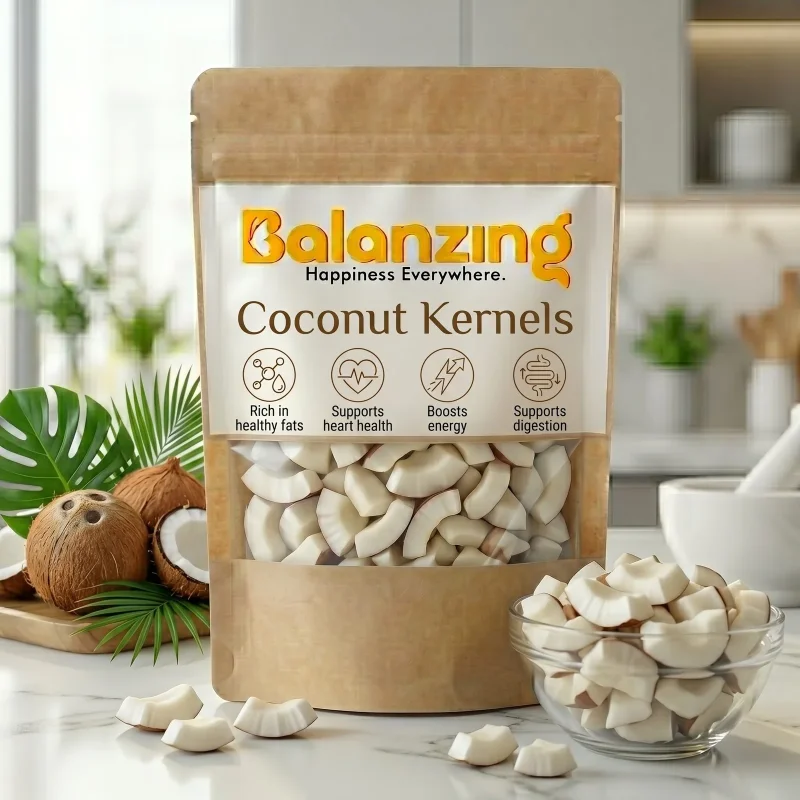
How can I use Coconut Kernels from Balanzing to enhance both taste and nutrition in my meals?
Coconut Kernels from Balanzing are perfect for adding natural flavor and essential nutrients to your daily diet. You can enjoy them raw, roasted, or incorporated into smoothies, desserts, or savory dishes. Their soft texture and subtle sweetness make them versatile, while their nutritional richness supports energy, digestion, and overall wellness, making them a simple yet effective addition to a balanced lifestyle.

user –
My first purchase of Balanzing Coconut Kernels was excellent. The freshness and quality are immediately noticeable. I used them in baking and as a quick snack, and they added a delightful crunch and natural flavor. For a single purchase, I feel I got great value and will definitely consider buying again.
user –
I purchased Balanzing Coconut Kernels for the first time, and they did not disappoint. The kernels are fresh, crunchy, and have a natural, authentic coconut flavor. I tried them in my smoothie and as a topping for yogurt, and both worked perfectly. It’s a simple, healthy snack that tastes great, and I’m very satisfied with this first buy.
user –
I bought Balanzing Coconut Kernels to try for the first time, and I’m really impressed. The freshness and natural flavor are noticeable right away. I added them to my morning smoothie and even sprinkled some on my oatmeal—they blended perfectly and added a nice crunch. The quality feels premium, and I’m happy to have found a healthy snack that’s simple and natural. For a single purchase, this definitely exceeded my expectations, and I’ll likely order again soon.
user –
I recently tried Coconut Kernels from Balanzing, and they have completely changed my snacking experience. The freshness and natural flavor are incredible, and they blend perfectly into my morning smoothies and desserts. I also love tossing them into my baking recipes for an extra layer of taste and texture. The quality is consistently high, and I feel confident knowing I’m consuming a wholesome, nutrient-rich product. Balanzing has truly set a new standard for premium coconut kernels!