
Description
Chironji Kerala, Chironji Thiruvananthapuram, Chironji Neyyattinkara, Chironji Varkala, Chironji Attingal, Chironji Kollam, Chironji Karunagappally, Chironji Punalur, Chironji Paravur, Chironji Pathanamthitta, Chironji Thiruvalla, Chironji Adoor, Chironji Pandalam, Chironji Alappuzha, Chironji Cherthala, Chironji Kayamkulam, Chironji Haripad, Chironji Kottayam, Chironji Changanassery, Chironji Pala, Chironji Vaikom, Chironji Idukki, Chironji Thodupuzha, Chironji Munnar, Chironji Kattappana, Chironji Kochi, Chironji Aluva, Chironji Perumbavoor, Chironji Muvattupuzha, Chironji Kothamangalam, Chironji Thrissur, Chironji Guruvayur, Chironji Irinjalakuda, Chironji Chalakkudy, Chironji Palakkad, Chironji Ottapalam, Chironji Shoranur, Chironji Chittur, Chironji Malappuram, Chironji Manjeri, Chironji Tirur, Chironji Ponnani, Chironji Perinthalmanna, Chironji Kozhikode, Chironji Vadakara, Chironji Koyilandy, Chironji Ramanattukara, Chironji Kalpetta, Chironji Sulthan Bathery, Chironji Mananthavady, Chironji Kannur, Chironji Thalassery, Chironji Payyannur, Chironji Mattannur, Chironji Kasaragod, Chironji Kanhangad, Chironji Nileshwar.Culinary artisans value their adaptability, incorporating them into porridges, smoothies, rice dishes, festive sweets, and specialty breads, appreciating how effortlessly they enhance both taste and nourishment.Chironji online store, Chironji price online, Chironji home delivery, Chironji store near me, Chironji wholesale supplier, Chironji wholesale price, Chironji discount offer, Chironji retail supplier, Chironji online shop, Chironji distributor, Chironji for weight loss, best deals on Chironji, bulk Chironji online, bulk Chironji supplier, bulk Chironji price, buy Chironji online, export quality Chironji, fresh Chironji online, gluten free Chironji, healthy Chironji snack, heart healthy Chironji, high protein Chironji, immunity boosting Chironji, keto friendly Chironji, natural Chironji food, nutritious Chironji snack, order Chironji online, organic Chironji online, premium Chironji online, raw Chironji online, roasted Chironji online, sliced Chironji, vegan Chironji, whole Chironji, organic premium Chironji, best quality Chironji, natural raw Chironji, roasted salted Chironji, jumbo size Chironji, roasted unsalted Chironji.Chironji for energy boost, Chironji for skin nourishment, Culinary-use Chironji seeds, Edible Chironji seeds India, Organic Chironji kernels online, Chironji for natural vitality, Premium Chironji kernels, Chironji for immunity enhancement, Roasted Chironji treats, Chironji for detox routines, Chironji for hair strength, Chironji for heart wellness, Daily wellness with Chironji, Antioxidant-rich Chironji seeds, Smoothie-ready Chironji seeds, Chironji for digestion support, Nutrient-rich Chironji seeds.Smoothie-ready Chironji seeds, Soft-bite Chironji snacks, Nutrient-rich Chironji seeds, Charoli nuts, roasted unsalted Chironji.
Chironji seeds are a treasured ingredient known for their rich taste, versatility, and nutritional value, making them an essential addition to both traditional and modern lifestyles, as Chironji for hair strength and Chironji for skin nourishment are widely appreciated for supporting natural beauty from within while also contributing to overall vitality, and Chironji for heart wellness along with daily wellness with Chironji reflects their role in maintaining balanced living through their nutrient-dense profile; these antioxidant-rich Chironji seeds and nutrient-rich Chironji seeds are carefully sourced to retain their natural goodness, making them ideal as smoothie-ready Chironji seeds and a healthy Chironji snack that fits effortlessly into daily routines, while Chironji for digestion support and Chironji for energy boost make them a reliable option for those seeking gentle nourishment and sustained energy throughout the day; widely used as culinary-use Chironji seeds, they enhance both sweet and savory dishes with their delicate flavor and texture, and edible Chironji seeds India are especially valued in regional cuisines where authenticity and quality matter, while organic Chironji kernels online and premium Chironji kernels ensure that consumers receive the finest selections available; their benefits extend further with Chironji for immunity enhancement and Chironji for detox routines, aligning with modern health-conscious preferences, and roasted Chironji treats provide a flavorful way to enjoy these benefits; easily accessible across regions such as Chironji Kerala, they are available through a Chironji online store where customers can explore Chironji price online, enjoy Chironji home delivery, or find a Chironji store near me for convenient purchasing, while businesses can rely on a Chironji wholesale supplier, Chironji retail supplier, or Chironji distributor to access Chironji wholesale price and attractive Chironji discount offer options; shoppers can discover best deals on Chironji, bulk Chironji online, bulk Chironji supplier, and bulk Chironji price for larger requirements, making it simple to buy Chironji online for both personal and commercial needs, including export quality Chironji and fresh Chironji online selections; suitable for various dietary preferences, they are recognized as gluten free Chironji, heart healthy Chironji, high protein Chironji, and immunity boosting Chironji, while also serving as natural Chironji food and a nutritious Chironji snack that supports balanced diets and even Chironji for weight loss when consumed mindfully; with the ease to order Chironji online, consumers can choose from organic Chironji online, premium Chironji online, raw Chironji online, roasted Chironji online, vegan Chironji, whole Chironji, and organic premium Chironji varieties, ensuring flexibility and choice, while maintaining standards of best quality Chironji, natural raw Chironji, roasted salted Chironji, and jumbo size Chironji options that cater to different preferences; overall, Chironji stands out as a versatile, flavorful, and nourishing ingredient that seamlessly combines tradition, health benefits, and modern convenience, making it a valuable addition to kitchens and lifestyles focused on quality and well-being.
Their understated sweetness allows them to harmonize beautifully with fragrant elements such as cardamom, saffron, rosewater, nutmeg, and cinnamon in sweet preparations, while also complementing savory seasonings like cumin, coriander, turmeric, and black pepper in rich gravies. Culinary artisans value their adaptability, incorporating them into porridges, smoothies, rice dishes, festive sweets, and specialty breads, appreciating how effortlessly they enhance both taste and nourishment. The cultivation and harvesting of the trees that yield these kernels often sustain rural communities, providing seasonal livelihoods and preserving ecological balance through responsible forest management practices that ensure long-term sustainability. These seeds carry cultural significance as well, frequently appearing in dishes prepared for weddings, festivals, and special gatherings, symbolizing abundance, care, and hospitality. Their presence in celebratory foods reflects a deep-rooted connection between nourishment and tradition, where recipes are passed down through generations and refined with time. Nutritionally dense yet naturally wholesome, they contribute healthy energy in compact form, making them particularly suitable for individuals seeking balanced sustenance during busy days or physically demanding routines. The beneficial fats they contain support the absorption of fat-soluble vitamins, enhancing the bioavailability of nutrients from accompanying foods. Finely ground versions have also found a place in natural skincare rituals, blended with milk or floral waters to create gentle exfoliating masks believed to cleanse and soften the complexion through mild abrasion and nourishing oils. Similarly, powdered forms are sometimes incorporated into hair-conditioning pastes, highlighting their multipurpose value beyond the kitchen. Proper storage in airtight containers away from heat and moisture helps maintain freshness and prevent rancidity, allowing households to keep a steady supply for regular use. As global culinary exploration continues to expand, chefs and nutrition enthusiasts alike have rediscovered these traditional kernels, integrating them into contemporary recipes such as plant-based spreads, dairy-free desserts, artisanal sauces, and energy bars. Their mild profile makes them an excellent natural thickening agent, offering an alternative to refined starches while maintaining a clean ingredient list. Because they blend smoothly when soaked and processed, they are well suited for creamy soups and gravies that require body without heaviness. In confectionery, their addition can reduce the need for excessive sweeteners, as their inherent richness contributes to perceived sweetness and mouthfeel. Their balanced composition of fats, protein, and micronutrients aligns with modern wellness philosophies that emphasize minimally processed, nutrient-dense foods. Over time, appreciation for these kernels has extended beyond regional boundaries, introducing them to diverse cuisines and innovative culinary experiments. Bakers have incorporated finely ground versions into specialty pastries to add moisture and subtle flavor, while beverage creators have used them to enhance texture in plant-based drinks and smoothies. The seeds’ gentle crunch also makes them a pleasing garnish for salads and roasted vegetables, offering contrast in texture while contributing valuable nutrients. From a sustainability perspective, responsible harvesting supports biodiversity and encourages the preservation of native tree species, reinforcing the importance of environmental stewardship. In community kitchens, they are often prepared in large batches for festive occasions, where their inclusion elevates simple ingredients into memorable dishes shared among family and friends. Their adaptability extends to savory rice preparations, where they are sautéed lightly in clarified butter or oil before being folded into aromatic grains, enhancing both fragrance and nutritional value. The natural oils present within the kernels contribute to a satisfying mouthfeel that promotes satiety, supporting mindful eating practices and reducing the likelihood of overconsumption. Because they are plant-derived, they fit comfortably within vegetarian and plant-forward dietary patterns, offering an accessible source of protein and beneficial fats without reliance on animal products. Their gentle flavor profile ensures compatibility with both traditional and modern palates, making them suitable for children and adults alike. In certain culinary traditions, these seeds are combined with herbs and spices to create rich pastes that serve as the foundation for celebratory gravies, demonstrating their ability to unify complex flavor profiles. They can also be caramelized lightly for dessert toppings, where their subtle sweetness intensifies under gentle heat. Nutritional awareness has further amplified interest in these kernels, as consumers increasingly seek ingredients that deliver both taste and health benefits in equal measure. Their mineral content supports muscle function and nerve signaling, while their natural energy density offers sustained fuel without reliance on refined sugars. When consumed in moderation as part of a varied diet, they contribute to balanced nutrition and overall vitality. Their cultural legacy, nutritional richness, culinary flexibility, and sustainable origins collectively define them as more than just an ingredient; they represent a harmonious blend of tradition and modern wellness. Whether incorporated into cherished family recipes, innovative contemporary dishes, or simple daily meals, these modest ivory seeds continue to offer nourishment, flavor, and cultural continuity, proving that even the smallest natural foods can carry profound significance across generations and cuisines.
For generations, these seeds have been included in restorative beverages prepared with warm milk and aromatic spices, creating soothing tonics believed to encourage stamina, internal balance, and comfort during seasonal transitions. When lightly roasted, their flavor deepens, releasing a warm aroma and transforming their texture into a delicate crispness that makes them enjoyable as a simple snack or as part of a mixture with dried fruits and other seeds. Their understated sweetness allows them to harmonize beautifully with fragrant elements such as cardamom, saffron, rosewater, nutmeg, and cinnamon in sweet preparations, while also complementing savory seasonings like cumin, coriander, turmeric, and black pepper in rich gravies.
Because they blend smoothly when soaked and processed, they are well suited for creamy soups and gravies that require body without heaviness. In confectionery, their addition can reduce the need for excessive sweeteners, as their inherent richness contributes to perceived sweetness and mouthfeel. Their balanced composition of fats, protein, and micronutrients aligns with modern wellness philosophies that emphasize minimally processed, nutrient-dense foods. Over time, appreciation for these kernels has extended beyond regional boundaries, introducing them to diverse cuisines and innovative culinary experiments. Bakers have incorporated finely ground versions into specialty pastries to add moisture and subtle flavor, while beverage creators have used them to enhance texture in plant-based drinks and smoothies. The seeds’ gentle crunch also makes them a pleasing garnish for salads and roasted vegetables, offering contrast in texture while contributing valuable nutrients. From a sustainability perspective, responsible harvesting supports biodiversity and encourages the preservation of native tree species, reinforcing the importance of environmental stewardship. In community kitchens, they are often prepared in large batches for festive occasions, where their inclusion elevates simple ingredients into memorable dishes shared among family and friends. Their adaptability extends to savory rice preparations, where they are sautéed lightly in clarified butter or oil before being folded into aromatic grains, enhancing both fragrance and nutritional value. The natural oils present within the kernels contribute to a satisfying mouthfeel that promotes satiety, supporting mindful eating practices and reducing the likelihood of overconsumption. Because they are plant-derived, they fit comfortably within vegetarian and plant-forward dietary patterns, offering an accessible source of protein and beneficial fats without reliance on animal products. Their gentle flavor profile ensures compatibility with both traditional and modern palates, making them suitable for children and adults alike. In certain culinary traditions, these seeds are combined with herbs and spices to create rich pastes that serve as the foundation for celebratory gravies, demonstrating their ability to unify complex flavor profiles. They can also be caramelized lightly for dessert toppings, where their subtle sweetness intensifies under gentle heat. Nutritional awareness has further amplified interest in these kernels, as consumers increasingly seek ingredients that deliver both taste and health benefits in equal measure. Their mineral content supports muscle function and nerve signaling, while their natural energy density offers sustained fuel without reliance on refined sugars. When consumed in moderation as part of a varied diet, they contribute to balanced nutrition and overall vitality. Their cultural legacy, nutritional richness, culinary flexibility, and sustainable origins collectively define them as more than just an ingredient; they represent a harmonious blend of tradition and modern wellness. Whether incorporated into cherished family recipes, innovative contemporary dishes, or simple daily meals, these modest ivory seeds continue to offer nourishment, flavor, and cultural continuity, proving that even the smallest natural foods can carry profound significance across generations and cuisines.
For generations, these seeds have been included in restorative beverages prepared with warm milk and aromatic spices, creating soothing tonics believed to encourage stamina, internal balance, and comfort during seasonal transitions. When lightly roasted, their flavor deepens, releasing a warm aroma and transforming their texture into a delicate crispness that makes them enjoyable as a simple snack or as part of a mixture with dried fruits and other seeds. Their understated sweetness allows them to harmonize beautifully with fragrant elements such as cardamom, saffron, rosewater, nutmeg, and cinnamon in sweet preparations, while also complementing savory seasonings like cumin, coriander, turmeric, and black pepper in rich gravies.Because they blend smoothly when soaked and processed, they are well suited for creamy soups and gravies that require body without heaviness. In confectionery, their addition can reduce the need for excessive sweeteners, as their inherent richness contributes to perceived sweetness and mouthfeel. Their balanced composition of fats, protein, and micronutrients aligns with modern wellness philosophies that emphasize minimally processed, nutrient-dense foods. Over time, appreciation for these kernels has extended beyond regional boundaries, introducing them to diverse cuisines and innovative culinary experiments. Bakers have incorporated finely ground versions into specialty pastries to add moisture and subtle flavor, while beverage creators have used them to enhance texture in plant-based drinks and smoothies. The seeds’ gentle crunch also makes them a pleasing garnish for salads and roasted vegetables, offering contrast in texture while contributing valuable nutrients. From a sustainability perspective, responsible harvesting supports biodiversity and encourages the preservation of native tree species, reinforcing the importance of environmental stewardship. In community kitchens, they are often prepared in large batches for festive occasions, where their inclusion elevates simple ingredients into memorable dishes shared among family and friends. Their adaptability extends to savory rice preparations, where they are sautéed lightly in clarified butter or oil before being folded into aromatic grains, enhancing both fragrance and nutritional value. The natural oils present within the kernels contribute to a satisfying mouthfeel that promotes satiety, supporting mindful eating practices and reducing the likelihood of overconsumption. Because they are plant-derived, they fit comfortably within vegetarian and plant-forward dietary patterns, offering an accessible source of protein and beneficial fats without reliance on animal products. Their gentle flavor profile ensures compatibility with both traditional and modern palates, making them suitable for children and adults alike. In certain culinary traditions, these seeds are combined with herbs and spices to create rich pastes that serve as the foundation for celebratory gravies, demonstrating their ability to unify complex flavor profiles. They can also be caramelized lightly for dessert toppings, where their subtle sweetness intensifies under gentle heat. Nutritional awareness has further amplified interest in these kernels, as consumers increasingly seek ingredients that deliver both taste and health benefits in equal measure. Their mineral content supports muscle function and nerve signaling, while their natural energy density offers sustained fuel without reliance on refined sugars. When consumed in moderation as part of a varied diet, they contribute to balanced nutrition and overall vitality. Their cultural legacy, nutritional richness, culinary flexibility, and sustainable origins collectively define them as more than just an ingredient; they represent a harmonious blend of tradition and modern wellness. Whether incorporated into cherished family recipes, innovative contemporary dishes, or simple daily meals, these modest ivory seeds continue to offer nourishment, flavor, and cultural continuity, proving that even the smallest natural foods can carry profound significance across generations and cuisines.
For generations, these seeds have been included in restorative beverages prepared with warm milk and aromatic spices, creating soothing tonics believed to encourage stamina, internal balance, and comfort during seasonal transitions. When lightly roasted, their flavor deepens, releasing a warm aroma and transforming their texture into a delicate crispness that makes them enjoyable as a simple snack or as part of a mixture with dried fruits and other seeds. Their understated sweetness allows them to harmonize beautifully with fragrant elements such as cardamom, saffron, rosewater, nutmeg, and cinnamon in sweet preparations, while also complementing savory seasonings like cumin, coriander, turmeric, and black pepper in rich gravies.
Because they blend smoothly when soaked and processed, they are well suited for creamy soups and gravies that require body without heaviness. In confectionery, their addition can reduce the need for excessive sweeteners, as their inherent richness contributes to perceived sweetness and mouthfeel. Their balanced composition of fats, protein, and micronutrients aligns with modern wellness philosophies that emphasize minimally processed, nutrient-dense foods. Over time, appreciation for these kernels has extended beyond regional boundaries, introducing them to diverse cuisines and innovative culinary experiments. Bakers have incorporated finely ground versions into specialty pastries to add moisture and subtle flavor, while beverage creators have used them to enhance texture in plant-based drinks and smoothies. The seeds’ gentle crunch also makes them a pleasing garnish for salads and roasted vegetables, offering contrast in texture while contributing valuable nutrients. From a sustainability perspective, responsible harvesting supports biodiversity and encourages the preservation of native tree species, reinforcing the importance of environmental stewardship. In community kitchens, they are often prepared in large batches for festive occasions, where their inclusion elevates simple ingredients into memorable dishes shared among family and friends. Their adaptability extends to savory rice preparations, where they are sautéed lightly in clarified butter or oil before being folded into aromatic grains, enhancing both fragrance and nutritional value. The natural oils present within the kernels contribute to a satisfying mouthfeel that promotes satiety, supporting mindful eating practices and reducing the likelihood of overconsumption. Because they are plant-derived, they fit comfortably within vegetarian and plant-forward dietary patterns, offering an accessible source of protein and beneficial fats without reliance on animal products. Their gentle flavor profile ensures compatibility with both traditional and modern palates, making them suitable for children and adults alike. In certain culinary traditions, these seeds are combined with herbs and spices to create rich pastes that serve as the foundation for celebratory gravies, demonstrating their ability to unify complex flavor profiles. They can also be caramelized lightly for dessert toppings, where their subtle sweetness intensifies under gentle heat. Nutritional awareness has further amplified interest in these kernels, as consumers increasingly seek ingredients that deliver both taste and health benefits in equal measure. Their mineral content supports muscle function and nerve signaling, while their natural energy density offers sustained fuel without reliance on refined sugars. When consumed in moderation as part of a varied diet, they contribute to balanced nutrition and overall vitality. Their cultural legacy, nutritional richness, culinary flexibility, and sustainable origins collectively define them as more than just an ingredient; they represent a harmonious blend of tradition and modern wellness. Whether incorporated into cherished family recipes, innovative contemporary dishes, or simple daily meals, these modest ivory seeds continue to offer nourishment, flavor, and cultural continuity, proving that even the smallest natural foods can carry profound significance across generations and cuisines.
For generations, these seeds have been included in restorative beverages prepared with warm milk and aromatic spices, creating soothing tonics believed to encourage stamina, internal balance, and comfort during seasonal transitions. When lightly roasted, their flavor deepens, releasing a warm aroma and transforming their texture into a delicate crispness that makes them enjoyable as a simple snack or as part of a mixture with dried fruits and other seeds. Their understated sweetness allows them to harmonize beautifully with fragrant elements such as cardamom, saffron, rosewater, nutmeg, and cinnamon in sweet preparations, while also complementing savory seasonings like cumin, coriander, turmeric, and black pepper in rich gravies.Because they blend smoothly when soaked and processed, they are well suited for creamy soups and gravies that require body without heaviness. In confectionery, their addition can reduce the need for excessive sweeteners, as their inherent richness contributes to perceived sweetness and mouthfeel. Their balanced composition of fats, protein, and micronutrients aligns with modern wellness philosophies that emphasize minimally processed, nutrient-dense foods. Over time, appreciation for these kernels has extended beyond regional boundaries, introducing them to diverse cuisines and innovative culinary experiments. Bakers have incorporated finely ground versions into specialty pastries to add moisture and subtle flavor, while beverage creators have used them to enhance texture in plant-based drinks and smoothies. The seeds’ gentle crunch also makes them a pleasing garnish for salads and roasted vegetables, offering contrast in texture while contributing valuable nutrients. From a sustainability perspective, responsible harvesting supports biodiversity and encourages the preservation of native tree species, reinforcing the importance of environmental stewardship. In community kitchens, they are often prepared in large batches for festive occasions, where their inclusion elevates simple ingredients into memorable dishes shared among family and friends. Their adaptability extends to savory rice preparations, where they are sautéed lightly in clarified butter or oil before being folded into aromatic grains, enhancing both fragrance and nutritional value. The natural oils present within the kernels contribute to a satisfying mouthfeel that promotes satiety, supporting mindful eating practices and reducing the likelihood of overconsumption. Because they are plant-derived, they fit comfortably within vegetarian and plant-forward dietary patterns, offering an accessible source of protein and beneficial fats without reliance on animal products. Their gentle flavor profile ensures compatibility with both traditional and modern palates, making them suitable for children and adults alike. In certain culinary traditions, these seeds are combined with herbs and spices to create rich pastes that serve as the foundation for celebratory gravies, demonstrating their ability to unify complex flavor profiles. They can also be caramelized lightly for dessert toppings, where their subtle sweetness intensifies under gentle heat. Nutritional awareness has further amplified interest in these kernels, as consumers increasingly seek ingredients that deliver both taste and health benefits in equal measure. Their mineral content supports muscle function and nerve signaling, while their natural energy density offers sustained fuel without reliance on refined sugars. When consumed in moderation as part of a varied diet, they contribute to balanced nutrition and overall vitality. Their cultural legacy, nutritional richness, culinary flexibility, and sustainable origins collectively define them as more than just an ingredient; they represent a harmonious blend of tradition and modern wellness. Whether incorporated into cherished family recipes, innovative contemporary dishes, or simple daily meals, these modest ivory seeds continue to offer nourishment, flavor, and cultural continuity, proving that even the smallest natural foods can carry profound significance across generations and cuisines.
For generations, these seeds have been included in restorative beverages prepared with warm milk and aromatic spices, creating soothing tonics believed to encourage stamina, internal balance, and comfort during seasonal transitions. When lightly roasted, their flavor deepens, releasing a warm aroma and transforming their texture into a delicate crispness that makes them enjoyable as a simple snack or as part of a mixture with dried fruits and other seeds. Their understated sweetness allows them to harmonize beautifully with fragrant elements such as cardamom, saffron, rosewater, nutmeg, and cinnamon in sweet preparations, while also complementing savory seasonings like cumin, coriander, turmeric, and black pepper in rich gravies.Because they blend smoothly when soaked and processed, they are well suited for creamy soups and gravies that require body without heaviness. In confectionery, their addition can reduce the need for excessive sweeteners, as their inherent richness contributes to perceived sweetness and mouthfeel. Their balanced composition of fats, protein, and micronutrients aligns with modern wellness philosophies that emphasize minimally processed, nutrient-dense foods. Over time, appreciation for these kernels has extended beyond regional boundaries, introducing them to diverse cuisines and innovative culinary experiments. Bakers have incorporated finely ground versions into specialty pastries to add moisture and subtle flavor, while beverage creators have used them to enhance texture in plant-based drinks and smoothies. The seeds’ gentle crunch also makes them a pleasing garnish for salads and roasted vegetables, offering contrast in texture while contributing valuable nutrients. From a sustainability perspective, responsible harvesting supports biodiversity and encourages the preservation of native tree species, reinforcing the importance of environmental stewardship. In community kitchens, they are often prepared in large batches for festive occasions, where their inclusion elevates simple ingredients into memorable dishes shared among family and friends. Their adaptability extends to savory rice preparations, where they are sautéed lightly in clarified butter or oil before being folded into aromatic grains, enhancing both fragrance and nutritional value. The natural oils present within the kernels contribute to a satisfying mouthfeel that promotes satiety, supporting mindful eating practices and reducing the likelihood of overconsumption. Because they are plant-derived, they fit comfortably within vegetarian and plant-forward dietary patterns, offering an accessible source of protein and beneficial fats without reliance on animal products. Their gentle flavor profile ensures compatibility with both traditional and modern palates, making them suitable for children and adults alike. In certain culinary traditions, these seeds are combined with herbs and spices to create rich pastes that serve as the foundation for celebratory gravies, demonstrating their ability to unify complex flavor profiles. They can also be caramelized lightly for dessert toppings, where their subtle sweetness intensifies under gentle heat. Nutritional awareness has further amplified interest in these kernels, as consumers increasingly seek ingredients that deliver both taste and health benefits in equal measure. Their mineral content supports muscle function and nerve signaling, while their natural energy density offers sustained fuel without reliance on refined sugars. When consumed in moderation as part of a varied diet, they contribute to balanced nutrition and overall vitality. Their cultural legacy, nutritional richness, culinary flexibility, and sustainable origins collectively define them as more than just an ingredient; they represent a harmonious blend of tradition and modern wellness. Whether incorporated into cherished family recipes, innovative contemporary dishes, or simple daily meals, these modest ivory seeds continue to offer nourishment, flavor, and cultural continuity, proving that even the smallest natural foods can carry profound significance across generations and cuisines.
For generations, these seeds have been included in restorative beverages prepared with warm milk and aromatic spices, creating soothing tonics believed to encourage stamina, internal balance, and comfort during seasonal transitions. When lightly roasted, their flavor deepens, releasing a warm aroma and transforming their texture into a delicate crispness that makes them enjoyable as a simple snack or as part of a mixture with dried fruits and other seeds. Their understated sweetness allows them to harmonize beautifully with fragrant elements such as cardamom, saffron, rosewater, nutmeg, and cinnamon in sweet preparations, while also complementing savory seasonings like cumin, coriander, turmeric, and black pepper in rich gravies.Because they blend smoothly when soaked and processed, they are well suited for creamy soups and gravies that require body without heaviness. In confectionery, their addition can reduce the need for excessive sweeteners, as their inherent richness contributes to perceived sweetness and mouthfeel. Their balanced composition of fats, protein, and micronutrients aligns with modern wellness philosophies that emphasize minimally processed, nutrient-dense foods. Over time, appreciation for these kernels has extended beyond regional boundaries, introducing them to diverse cuisines and innovative culinary experiments. Bakers have incorporated finely ground versions into specialty pastries to add moisture and subtle flavor, while beverage creators have used them to enhance texture in plant-based drinks and smoothies. The seeds’ gentle crunch also makes them a pleasing garnish for salads and roasted vegetables, offering contrast in texture while contributing valuable nutrients. From a sustainability perspective, responsible harvesting supports biodiversity and encourages the preservation of native tree species, reinforcing the importance of environmental stewardship. In community kitchens, they are often prepared in large batches for festive occasions, where their inclusion elevates simple ingredients into memorable dishes shared among family and friends. Their adaptability extends to savory rice preparations, where they are sautéed lightly in clarified butter or oil before being folded into aromatic grains, enhancing both fragrance and nutritional value. The natural oils present within the kernels contribute to a satisfying mouthfeel that promotes satiety, supporting mindful eating practices and reducing the likelihood of overconsumption. Because they are plant-derived, they fit comfortably within vegetarian and plant-forward dietary patterns, offering an accessible source of protein and beneficial fats without reliance on animal products. Their gentle flavor profile ensures compatibility with both traditional and modern palates, making them suitable for children and adults alike. In certain culinary traditions, these seeds are combined with herbs and spices to create rich pastes that serve as the foundation for celebratory gravies, demonstrating their ability to unify complex flavor profiles. They can also be caramelized lightly for dessert toppings, where their subtle sweetness intensifies under gentle heat. Nutritional awareness has further amplified interest in these kernels, as consumers increasingly seek ingredients that deliver both taste and health benefits in equal measure. Their mineral content supports muscle function and nerve signaling, while their natural energy density offers sustained fuel without reliance on refined sugars. When consumed in moderation as part of a varied diet, they contribute to balanced nutrition and overall vitality. Their cultural legacy, nutritional richness, culinary flexibility, and sustainable origins collectively define them as more than just an ingredient; they represent a harmonious blend of tradition and modern wellness. Whether incorporated into cherished family recipes, innovative contemporary dishes, or simple daily meals, these modest ivory seeds continue to offer nourishment, flavor, and cultural continuity, proving that even the smallest natural foods can carry profound significance across generations and cuisines.
For generations, these seeds have been included in restorative beverages prepared with warm milk and aromatic spices, creating soothing tonics believed to encourage stamina, internal balance, and comfort during seasonal transitions. When lightly roasted, their flavor deepens, releasing a warm aroma and transforming their texture into a delicate crispness that makes them enjoyable as a simple snack or as part of a mixture with dried fruits and other seeds. Their understated sweetness allows them to harmonize beautifully with fragrant elements such as cardamom, saffron, rosewater, nutmeg, and cinnamon in sweet preparations, while also complementing savory seasonings like cumin, coriander, turmeric, and black pepper in rich gravies.Because they blend smoothly when soaked and processed, they are well suited for creamy soups and gravies that require body without heaviness. In confectionery, their addition can reduce the need for excessive sweeteners, as their inherent richness contributes to perceived sweetness and mouthfeel. Their balanced composition of fats, protein, and micronutrients aligns with modern wellness philosophies that emphasize minimally processed, nutrient-dense foods. Over time, appreciation for these kernels has extended beyond regional boundaries, introducing them to diverse cuisines and innovative culinary experiments. Bakers have incorporated finely ground versions into specialty pastries to add moisture and subtle flavor, while beverage creators have used them to enhance texture in plant-based drinks and smoothies. The seeds’ gentle crunch also makes them a pleasing garnish for salads and roasted vegetables, offering contrast in texture while contributing valuable nutrients. From a sustainability perspective, responsible harvesting supports biodiversity and encourages the preservation of native tree species, reinforcing the importance of environmental stewardship. In community kitchens, they are often prepared in large batches for festive occasions, where their inclusion elevates simple ingredients into memorable dishes shared among family and friends. Their adaptability extends to savory rice preparations, where they are sautéed lightly in clarified butter or oil before being folded into aromatic grains, enhancing both fragrance and nutritional value. The natural oils present within the kernels contribute to a satisfying mouthfeel that promotes satiety, supporting mindful eating practices and reducing the likelihood of overconsumption. Because they are plant-derived, they fit comfortably within vegetarian and plant-forward dietary patterns, offering an accessible source of protein and beneficial fats without reliance on animal products. Their gentle flavor profile ensures compatibility with both traditional and modern palates, making them suitable for children and adults alike. In certain culinary traditions, these seeds are combined with herbs and spices to create rich pastes that serve as the foundation for celebratory gravies, demonstrating their ability to unify complex flavor profiles. They can also be caramelized lightly for dessert toppings, where their subtle sweetness intensifies under gentle heat. Nutritional awareness has further amplified interest in these kernels, as consumers increasingly seek ingredients that deliver both taste and health benefits in equal measure. Their mineral content supports muscle function and nerve signaling, while their natural energy density offers sustained fuel without reliance on refined sugars. When consumed in moderation as part of a varied diet, they contribute to balanced nutrition and overall vitality. Their cultural legacy, nutritional richness, culinary flexibility, and sustainable origins collectively define them as more than just an ingredient; they represent a harmonious blend of tradition and modern wellness. Whether incorporated into cherished family recipes, innovative contemporary dishes, or simple daily meals, these modest ivory seeds continue to offer nourishment, flavor, and cultural continuity, proving that even the smallest natural foods can carry profound significance across generations and cuisines.
For generations, these seeds have been included in restorative beverages prepared with warm milk and aromatic spices, creating soothing tonics believed to encourage stamina, internal balance, and comfort during seasonal transitions. When lightly roasted, their flavor deepens, releasing a warm aroma and transforming their texture into a delicate crispness that makes them enjoyable as a simple snack or as part of a mixture with dried fruits and other seeds. Their understated sweetness allows them to harmonize beautifully with fragrant elements such as cardamom, saffron, rosewater, nutmeg, and cinnamon in sweet preparations, while also complementing savory seasonings like cumin, coriander, turmeric, and black pepper in rich gravies.Because they blend smoothly when soaked and processed, they are well suited for creamy soups and gravies that require body without heaviness. In confectionery, their addition can reduce the need for excessive sweeteners, as their inherent richness contributes to perceived sweetness and mouthfeel. Their balanced composition of fats, protein, and micronutrients aligns with modern wellness philosophies that emphasize minimally processed, nutrient-dense foods. Over time, appreciation for these kernels has extended beyond regional boundaries, introducing them to diverse cuisines and innovative culinary experiments. Bakers have incorporated finely ground versions into specialty pastries to add moisture and subtle flavor, while beverage creators have used them to enhance texture in plant-based drinks and smoothies. The seeds’ gentle crunch also makes them a pleasing garnish for salads and roasted vegetables, offering contrast in texture while contributing valuable nutrients. From a sustainability perspective, responsible harvesting supports biodiversity and encourages the preservation of native tree species, reinforcing the importance of environmental stewardship. In community kitchens, they are often prepared in large batches for festive occasions, where their inclusion elevates simple ingredients into memorable dishes shared among family and friends. Their adaptability extends to savory rice preparations, where they are sautéed lightly in clarified butter or oil before being folded into aromatic grains, enhancing both fragrance and nutritional value. The natural oils present within the kernels contribute to a satisfying mouthfeel that promotes satiety, supporting mindful eating practices and reducing the likelihood of overconsumption. Because they are plant-derived, they fit comfortably within vegetarian and plant-forward dietary patterns, offering an accessible source of protein and beneficial fats without reliance on animal products. Their gentle flavor profile ensures compatibility with both traditional and modern palates, making them suitable for children and adults alike. In certain culinary traditions, these seeds are combined with herbs and spices to create rich pastes that serve as the foundation for celebratory gravies, demonstrating their ability to unify complex flavor profiles. They can also be caramelized lightly for dessert toppings, where their subtle sweetness intensifies under gentle heat. Nutritional awareness has further amplified interest in these kernels, as consumers increasingly seek ingredients that deliver both taste and health benefits in equal measure. Their mineral content supports muscle function and nerve signaling, while their natural energy density offers sustained fuel without reliance on refined sugars. When consumed in moderation as part of a varied diet, they contribute to balanced nutrition and overall vitality. Their cultural legacy, nutritional richness, culinary flexibility, and sustainable origins collectively define them as more than just an ingredient; they represent a harmonious blend of tradition and modern wellness. Whether incorporated into cherished family recipes, innovative contemporary dishes, or simple daily meals, these modest ivory seeds continue to offer nourishment, flavor, and cultural continuity, proving that even the smallest natural foods can carry profound significance across generations and cuisines.
For generations, these seeds have been included in restorative beverages prepared with warm milk and aromatic spices, creating soothing tonics believed to encourage stamina, internal balance, and comfort during seasonal transitions. When lightly roasted, their flavor deepens, releasing a warm aroma and transforming their texture into a delicate crispness that makes them enjoyable as a simple snack or as part of a mixture with dried fruits and other seeds. Their understated sweetness allows them to harmonize beautifully with fragrant elements such as cardamom, saffron, rosewater, nutmeg, and cinnamon in sweet preparationsBecause they blend smoothly when soaked and processed, they are well suited for creamy soups and gravies that require body without heaviness. In confectionery, their addition can reduce the need for excessive sweeteners, as their inherent richness contributes to perceived sweetness and mouthfeel. Their balanced composition of fats, protein, and micronutrients aligns with modern wellness philosophies that emphasize minimally processed, nutrient-dense foods. Over time, appreciation for these kernels has extended beyond regional boundaries, introducing them to diverse cuisines and innovative culinary experiments. Bakers have incorporated finely ground versions into specialty pastries to add moisture and subtle flavor, while beverage creators have used them to enhance texture in plant-based drinks and smoothies. The seeds’ gentle crunch also makes them a pleasing garnish for salads and roasted vegetables, offering contrast in texture while contributing valuable nutrients. From a sustainability perspective, responsible harvesting supports biodiversity and encourages the preservation of native tree species, reinforcing the importance of environmental stewardship. In community kitchens, they are often prepared in large batches for festive occasions, where their inclusion elevates simple ingredients into memorable dishes shared among family and friends. Their adaptability extends to savory rice preparations, where they are sautéed lightly in clarified butter or oil before being folded into aromatic grains, enhancing both fragrance and nutritional value. The natural oils present within the kernels contribute to a satisfying mouthfeel that promotes satiety, supporting mindful eating practices and reducing the likelihood of overconsumption. Because they are plant-derived, they fit comfortably within vegetarian and plant-forward dietary patterns, offering an accessible source of protein and beneficial fats without reliance on animal products. Their gentle flavor profile ensures compatibility with both traditional and modern palates, making them suitable for children and adults alike. In certain culinary traditions, these seeds are combined with herbs and spices to create rich pastes that serve as the foundation for celebratory gravies, demonstrating their ability to unify complex flavor profiles. They can also be caramelized lightly for dessert toppings, where their subtle sweetness intensifies under gentle heat. Nutritional awareness has further amplified interest in these kernels, as consumers increasingly seek ingredients that deliver both taste and health benefits in equal measure. Their mineral content supports muscle function and nerve signaling, while their natural energy density offers sustained fuel without reliance on refined sugars. When consumed in moderation as part of a varied diet, they contribute to balanced nutrition and overall vitality. Their cultural legacy, nutritional richness, culinary flexibility, and sustainable origins collectively define them as more than just an ingredient; they represent a harmonious blend of tradition and modern wellness. Whether incorporated into cherished family recipes, innovative contemporary dishes, or simple daily meals, these modest ivory seeds continue to offer nourishment, flavor, and cultural continuity, proving that even the smallest natural foods can carry profound significance across generations and cuisines.
For generations, these seeds have been included in restorative beverages prepared with warm milk and aromatic spices, creating soothing tonics believed to encourage stamina, internal balance, and comfort during seasonal transitions. When lightly roasted, their flavor deepens, releasing a warm aroma and transforming their texture into a delicate crispness that makes them enjoyable as a simple snack or as part of a mixture with dried fruits and other seeds. Their understated sweetness allows them to harmonize beautifully with fragrant elements such as cardamom, saffron, rosewater, nutmeg, and cinnamon in sweet preparations, while also complementing savory seasonings like cumin, coriander, turmeric, and black pepper in rich gravies., while also complementing savory seasonings like cumin, coriander, turmeric, and black pepper in rich gravies.Because they blend smoothly when soaked and processed, they are well suited for creamy soups and gravies that require body without heaviness. In confectionery, their addition can reduce the need for excessive sweeteners, as their inherent richness contributes to perceived sweetness and mouthfeel. Their balanced composition of fats, protein, and micronutrients aligns with modern wellness philosophies that emphasize minimally processed, nutrient-dense foods. Over time, appreciation for these kernels has extended beyond regional boundaries, introducing them to diverse cuisines and innovative culinary experiments. Bakers have incorporated finely ground versions into specialty pastries to add moisture and subtle flavor, while beverage creators have used them to enhance texture in plant-based drinks and smoothies. The seeds’ gentle crunch also makes them a pleasing garnish for salads and roasted vegetables, offering contrast in texture while contributing valuable nutrients. From a sustainability perspective, responsible harvesting supports biodiversity and encourages the preservation of native tree species, reinforcing the importance of environmental stewardship. In community kitchens, they are often prepared in large batches for festive occasions, where their inclusion elevates simple ingredients into memorable dishes shared among family and friends. Their adaptability extends to savory rice preparations, where they are sautéed lightly in clarified butter or oil before being folded into aromatic grains, enhancing both fragrance and nutritional value. The natural oils present within the kernels contribute to a satisfying mouthfeel that promotes satiety, supporting mindful eating practices and reducing the likelihood of overconsumption. Because they are plant-derived, they fit comfortably within vegetarian and plant-forward dietary patterns, offering an accessible source of protein and beneficial fats without reliance on animal products. Their gentle flavor profile ensures compatibility with both traditional and modern palates, making them suitable for children and adults alike. In certain culinary traditions, these seeds are combined with herbs and spices to create rich pastes that serve as the foundation for celebratory gravies, demonstrating their ability to unify complex flavor profiles. They can also be caramelized lightly for dessert toppings, where their subtle sweetness intensifies under gentle heat. Nutritional awareness has further amplified interest in these kernels, as consumers increasingly seek ingredients that deliver both taste and health benefits in equal measure. Their mineral content supports muscle function and nerve signaling, while their natural energy density offers sustained fuel without reliance on refined sugars. When consumed in moderation as part of a varied diet, they contribute to balanced nutrition and overall vitality. Their cultural legacy, nutritional richness, culinary flexibility, and sustainable origins collectively define them as more than just an ingredient; they represent a harmonious blend of tradition and modern wellness. Whether incorporated into cherished family recipes, innovative contemporary dishes, or simple daily meals, these modest ivory seeds continue to offer nourishment, flavor, and cultural continuity, proving that even the smallest natural foods can carry profound significance across generations and cuisines.
For generations, these seeds have been included in restorative beverages prepared with warm milk and aromatic spices, creating soothing tonics believed to encourage stamina, internal balance, and comfort during seasonal transitions. When lightly roasted, their flavor deepens, releasing a warm aroma and transforming their texture into a delicate crispness that makes them enjoyable as a simple snack or as part of a mixture with dried fruits and other seeds. Their understated sweetness allows them to harmonize beautifully with fragrant elements such as cardamom, saffron, rosewater, nutmeg, and cinnamon in sweet preparations, while also complementing savory seasonings like cumin, coriander, turmeric, and black pepper in rich gravies.
Why Choose Chironji?
🌼 Enhances skin health
🔥 Boosts energy
🌿 Good for digestion
💛 Keeps body cool
✨ Rich traditional superfood
How to Enjoy
— Add to halwa & kheer
— Mix into milkshakes
— Use in gravies
Balanzing Thought
“True treasures are quiet — yet deeply nourishing.” 🌼

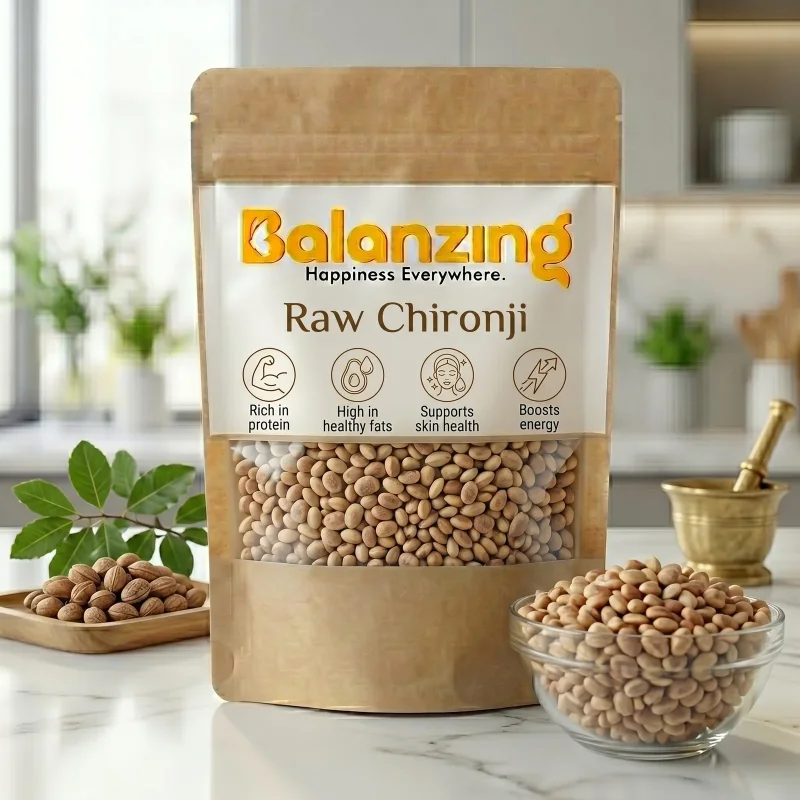
What makes Chironji from Balanzing a healthy choice compared to regular nuts?
Chironji from Balanzing is carefully sourced to retain its natural nutrients and delicate flavor. Unlike many processed nuts, these seeds are wholesome, minimally handled, and packed with essential minerals. Regular inclusion in your diet can support energy, digestion, and overall well-being, making them a smart and natural addition to snacks, recipes, or even daily meals.




user –
This is my first time trying Chironji from Balanzing, and I’m impressed. The texture and taste are excellent, and it blends well in sweets and desserts. A very good product and worth the purchase.
user –
I recently purchased Chironji from Balanzing, and I’m really happy with the quality. The nuts are clean, fresh, and perfect for my daily cooking. It’s definitely a useful product, and I’ll be buying again.
user –
I bought Chironji from Balanzing last week, and it turned out to be a great choice. The pack was neat, the nuts were fresh, and it’s very convenient for regular use. Really useful and good in quality.
user –
I recently purchased Chironji from Balanzing, and I’m extremely satisfied! The seeds are fresh, flavorful, and perfectly soft, making them ideal for snacking or adding to recipes. I’ve been incorporating them into my morning smoothies and desserts, and the natural taste is delightful. The quality is consistently high, and I appreciate how well-packaged and clean they arrive. Balanzing has truly made it easy to enjoy premium Chironji, and I’ll definitely be ordering again!