
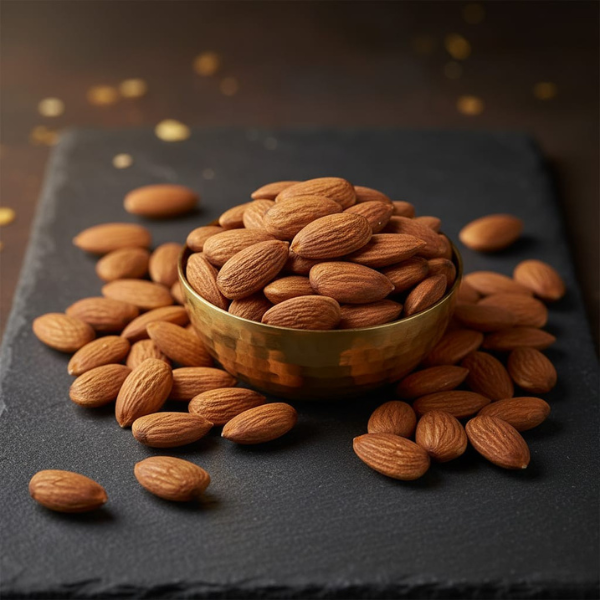
Description
Almonds
Why Choose Almonds?
🧠 Supports brain function
✨ Vitamin E for glowing skin
🔥 Clean, long-lasting energy
💪 Strengthens muscles
❤ Heart-healthy fats
How to Enjoy
— Eat soaked overnight
— Add to oats, smoothies, or desserts
— Use in shakes or laddoos
✨Balanzing Thought
“Strength begins with simple, steady choices.” 🌰
Roasted Almonds deliver a perfect balance of crunch and nourishment, making them a smart choice for daily snacking. These Skin-nourishing almonds are rich in vitamin E and antioxidants that help maintain a natural glow while supporting overall wellness. Energy-boosting almond bites provide sustained fuel throughout the day, keeping you active without relying on sugary snacks. Whether added to breakfast bowls, evening snacks, or on-the-go packs, these almonds support immunity, metabolism, and everyday vitality. With their wholesome nutrients and clean flavor, roasted almonds remain one of the simplest and most powerful superfoods you can enjoy anytime for health, glow, and energy, have long been treasured across civilizations for their delicate flavor, satisfying crunch, and remarkable nutritional richness, earning a place in kitchens, traditional remedies, festive celebrations, and modern wellness routines alike. Cultivated from the tree botanically known as Prunus dulcis, these edible seeds develop inside a fruit that resembles a small drupe, where the outer hull splits open upon maturity to reveal a hard shell protecting the prized kernel within. After harvesting, careful drying, shelling, grading, and packaging preserve their natural quality before they reach consumers, and attention to these processes plays a significant role in maintaining freshness, taste, and nutrient stability. Premium varieties are typically uniform in size, smooth in texture, and pleasantly aromatic, indicators of proper agricultural practices and thoughtful post-harvest handling. Over centuries, trade routes carried these nutrient-dense kernels from their origins in the Middle East and surrounding regions to Europe, Asia, and eventually the Americas, embedding them deeply in culinary traditions that range from Mediterranean pastries to South Asian sweets and contemporary plant-based innovations. Nutritionally, they are celebrated for offering a balanced composition of macronutrients and micronutrients, including plant-derived protein that contributes to muscle maintenance, dietary fiber that supports digestive regularity, and predominantly monounsaturated fats that are commonly associated with heart-conscious dietary patterns. They are also a natural source of vitamin E, a lipid-soluble antioxidant known for helping protect cells from oxidative stress, alongside essential minerals such as magnesium, calcium, phosphorus, and potassium, each of which supports fundamental physiological functions including nerve signaling, bone integrity, and electrolyte balance. Because of this dense nutritional profile, a modest portion can deliver substantial nourishment, making them an appealing choice for individuals seeking foods that provide both satiety and sustained energy without reliance on artificial additives or excessive processing. Their satisfying crunch and mild, slightly sweet flavor allow them to function as a convenient snack on their own, yet their versatility extends far beyond simple consumption from a handful; whole kernels may be enjoyed raw for their pure taste or gently roasted to deepen flavor and enhance aroma, while sliced or slivered pieces add textural contrast to salads, yogurt bowls, oatmeal, and grain-based dishes. Finely ground into meal, they serve as a gluten-free alternative to conventional flour, enabling the creation of tender baked goods that appeal to those reducing grain intake or managing gluten sensitivities when produced in certified facilities. Blended with water, they transform into a creamy plant-based beverage that can be naturally flavored with spices or fruit, and the residual pulp can be repurposed in cooking, illustrating a sustainable approach that minimizes waste while maximizing culinary creativity. In confectionery traditions, these kernels appear in marzipan, pralines, nougat, and festive sweets, where their subtle sweetness harmonizes with sugar and spice, while in savory contexts they enrich sauces, curries, and pilafs, contributing body and complexity without overpowering other ingredients. Beyond taste and nutrition, they have been associated in various cultures with prosperity, vitality, and celebration, often included in ceremonial dishes or gifted during special occasions as symbols of abundance and goodwill. From a wellness perspective, their combination of healthy fats, fiber, and protein promotes a gradual release of energy, helping maintain stable blood sugar levels when incorporated thoughtfully into balanced meals, and their nutrient density makes them popular among athletes, students, and professionals seeking convenient nourishment during demanding days. The presence of antioxidants and beneficial lipids has also drawn attention from those interested in supporting skin appearance and overall vitality through diet, reinforcing their reputation as a wholesome addition to daily routines. However, mindful portion control remains important, as their caloric density reflects the concentration of natural oils within each kernel; measuring servings and integrating them into meals rather than consuming them impulsively can help maintain dietary balance while still enjoying their many attributes. Storage conditions significantly influence quality, since exposure to heat, light, and moisture may accelerate oxidation of delicate fats; keeping them in airtight containers in cool environments, or even refrigeration in warmer climates, preserves flavor and extends shelf life, ensuring that the pleasant crunch and aroma remain intact over time. Agricultural practices surrounding their cultivation have increasingly emphasized sustainability, with growers adopting water-efficient irrigation systems, soil conservation methods, and integrated pest management to reduce environmental impact while maintaining yield and quality. Responsible sourcing and transparent supply chains allow consumers to support producers who prioritize ecological stewardship and fair labor practices, aligning food choices with broader values of environmental responsibility. In the context of modern dietary trends, these versatile seeds align with plant-forward eating patterns, low-carbohydrate approaches, and protein-conscious meal planning, demonstrating adaptability across nutritional philosophies without losing their traditional appeal. They complement fresh fruits in breakfast bowls, enhance vegetable dishes with texture, enrich homemade granola, and form the base of creamy spreads that substitute for dairy-based alternatives, underscoring their capacity to bridge classic recipes and contemporary innovations. Culinary experimentation continues to expand their applications, from crusting proteins for added crunch to blending into soups for thickness and depth, while artisanal producers craft flavored varieties using herbs, spices, or minimal sea salt to satisfy evolving consumer preferences. Their long shelf life compared to many fresh foods contributes to reduced food waste, and their portability makes them practical for travel, office snacks, and outdoor activities where refrigeration is limitedEducational initiatives often highlight their nutrient composition as part of broader discussions about balanced eating, illustrating how incorporating whole foods with minimal processing can contribute to overall dietary quality. At the same time, awareness of allergies remains crucial, as some individuals experience sensitivity to tree nuts and must avoid them entirely, underscoring the importance of clear labeling and informed consumption. Economic factors also shape their global presence, with major producing regions influencing market prices and availability, yet demand remains consistently high due to their established reputation and wide-ranging uses. Advances in food science have explored methods of preserving freshness, enhancing flavor through controlled roasting techniques, and developing innovative products derived from their meal or oil, expanding options available to consumers seeking diversity in taste and texture. Historically, these kernels have been documented in ancient texts and archaeological findings, suggesting their significance in early agricultural societies and their role in trade and cultural exchange, while modern nutrition research continues to examine their potential contributions to dietary patterns associated with longevity and well-being. Families often pass down recipes that feature them as essential ingredients in celebratory dishes, weaving them into personal histories and collective culinary heritage. Whether incorporated into breakfast smoothies, blended into savory sauces, folded into baked goods, or enjoyed simply as a nourishing snack, they represent a harmonious balance between flavor, texture, and nutrient density that few foods achieve so naturally. The enduring popularity of these seeds can be attributed not only to their pleasing taste but also to their adaptability, storability, and compatibility with diverse cultural cuisines and dietary goals. As consumers increasingly prioritize quality ingredients and transparency in sourcing, the appeal of minimally processed, nutrient-rich foods continues to rise, and these kernels stand as a compelling example of how traditional agricultural products can remain relevant in modern contexts. Their journey from orchard to table embodies a blend of natural growth, careful harvesting, thoughtful processing, and creative culinary use, illustrating the interconnectedness of farming, nutrition, culture, and sustainability. With mindful storage, responsible sourcing, and balanced consumption, they can form a valuable component of a varied diet that emphasizes whole foods, culinary enjoyment, and nutritional awareness, continuing a legacy that spans continents and centuries while meeting the evolving tastes and expectations of contemporary consumers.Educational initiatives often highlight their nutrient composition as part of broader discussions about balanced eating, illustrating how incorporating whole foods with minimal processing can contribute to overall dietary quality. At the same time, awareness of allergies remains crucial, as some individuals experience sensitivity to tree nuts and must avoid them entirely, underscoring the importance of clear labeling and informed consumption. Economic factors also shape their global presence, with major producing regions influencing market prices and availability, yet demand remains consistently high due to their established reputation and wide-ranging uses. Advances in food science have explored methods of preserving freshness, enhancing flavor through controlled roasting techniques, and developing innovative products derived from their meal or oil, expanding options available to consumers seeking diversity in taste and texture. Historically, these kernels have been documented in ancient texts and archaeological findings, suggesting their significance in early agricultural societies and their role in trade and cultural exchange, while modern nutrition research continues to examine their potential contributions to dietary patterns associated with longevity and well-being. Families often pass down recipes that feature them as essential ingredients in celebratory dishes, weaving them into personal histories and collective culinary heritage. Whether incorporated into breakfast smoothies, blended into savory sauces, folded into baked goods, or enjoyed simply as a nourishing snack, they represent a harmonious balance between flavor, texture, and nutrient density that few foods achieve so naturally. The enduring popularity of these seeds can be attributed not only to their pleasing taste but also to their adaptability, storability, and compatibility with diverse cultural cuisines and dietary goals. As consumers increasingly prioritize quality ingredients and transparency in sourcing, the appeal of minimally processed, nutrient-rich foods continues to rise, and these kernels stand as a compelling example of how traditional agricultural products can remain relevant in modern contexts. Their journey from orchard to table embodies a blend of natural growth, careful harvesting, thoughtful processing, and creative culinary use, illustrating the interconnectedness of farming, nutrition, culture, and sustainability. With mindful storage, responsible sourcing, and balanced consumption, they can form a valuable component of a varied diet that emphasizes whole foods, culinary enjoyment, and nutritional awareness, continuing a legacy that spans continents and centuries while meeting the evolving tastes and expectations of contemporary consumers.Educational initiatives often highlight their nutrient composition as part of broader discussions about balanced eating, illustrating how incorporating whole foods with minimal processing can contribute to overall dietary quality. At the same time, awareness of allergies remains crucial, as some individuals experience sensitivity to tree nuts and must avoid them entirely, underscoring the importance of clear labeling and informed consumption. Economic factors also shape their global presence, with major producing regions influencing market prices and availability, yet demand remains consistently high due to their established reputation and wide-ranging uses. Advances in food science have explored methods of preserving freshness, enhancing flavor through controlled roasting techniques, and developing innovative products derived from their meal or oil, expanding options available to consumers seeking diversity in taste and texture. Historically, these kernels have been documented in ancient texts and archaeological findings, suggesting their significance in early agricultural societies and their role in trade and cultural exchange, while modern nutrition research continues to examine their potential contributions to dietary patterns associated with longevity and well-being. Families often pass down recipes that feature them as essential ingredients in celebratory dishes, weaving them into personal histories and collective culinary heritage. Whether incorporated into breakfast smoothies, blended into savory sauces, folded into baked goods, or enjoyed simply as a nourishing snack, they represent a harmonious balance between flavor, texture, and nutrient density that few foods achieve so naturally. The enduring popularity of these seeds can be attributed not only to their pleasing taste but also to their adaptability, storability, and compatibility with diverse cultural cuisines and dietary goals. As consumers increasingly prioritize quality ingredients and transparency in sourcing, the appeal of minimally processed, nutrient-rich foods continues to rise, and these kernels stand as a compelling example of how traditional agricultural products can remain relevant in modern contexts. Their journey from orchard to table embodies a blend of natural growth, careful harvesting, thoughtful processing, and creative culinary use, illustrating the interconnectedness of farming, nutrition, culture, and sustainability. With mindful storage, responsible sourcing, and balanced consumption, they can form a valuable component of a varied diet that emphasizes whole foods, culinary enjoyment, and nutritional awareness, continuing a legacy that spans continents and centuries while meeting the evolving tastes and expectations of contemporary consumers.Educational initiatives often highlight their nutrient composition as part of broader discussions about balanced eating, illustrating how incorporating whole foods with minimal processing can contribute to overall dietary quality. At the same time, awareness of allergies remains crucial, as some individuals experience sensitivity to tree nuts and must avoid them entirely, underscoring the importance of clear labeling and informed consumption. Economic factors also shape their global presence, with major producing regions influencing market prices and availability, yet demand remains consistently high due to their established reputation and wide-ranging uses. Advances in food science have explored methods of preserving freshness, enhancing flavor through controlled roasting techniques, and developing innovative products derived from their meal or oil, expanding options available to consumers seeking diversity in taste and texture. Historically, these kernels have been documented in ancient texts and archaeological findings, suggesting their significance in early agricultural societies and their role in trade and cultural exchange, while modern nutrition research continues to examine their potential contributions to dietary patterns associated with longevity and well-being. Families often pass down recipes that feature them as essential ingredients in celebratory dishes, weaving them into personal histories and collective culinary heritage. Whether incorporated into breakfast smoothies, blended into savory sauces, folded into baked goods, or enjoyed simply as a nourishing snack, they represent a harmonious balance between flavor, texture, and nutrient density that few foods achieve so naturally. The enduring popularity of these seeds can be attributed not only to their pleasing taste but also to their adaptability, storability, and compatibility with diverse cultural cuisines and dietary goals. As consumers increasingly prioritize quality ingredients and transparency in sourcing, the appeal of minimally processed, nutrient-rich foods continues to rise, and these kernels stand as a compelling example of how traditional agricultural products can remain relevant in modern contexts. Their journey from orchard to table embodies a blend of natural growth, careful harvesting, thoughtful processing, and creative culinary use, illustrating the interconnectedness of farming, nutrition, culture, and sustainability. Their journey from orchard to table embodies a blend of natural growth, careful harvesting, thoughtful processing, and creative culinary use, illustrating the interconnectedness of farming, nutrition, culture, and sustainability. With mindful storage, responsible sourcing, and balanced consumption, they can form a valuable component of a varied diet that emphasizes whole foods, culinary enjoyment, and nutritional awareness, continuing a legacy that spans continents and centuries while meeting the evolving tastes and expectations of contemporary consumers.Educational initiatives often highlight their nutrient composition as part of broader discussions about balanced eating, illustrating how incorporating whole foods with minimal processing can contribute to overall dietary quality. At the same time, awareness of allergies remains crucial, as some individuals experience sensitivity to tree nuts and must avoid them entirely, underscoring the importance of clear labeling and informed consumption. Economic factors also shape their global presence, with major producing regions influencing market prices and availability, yet demand remains consistently high due to their established reputation and wide-ranging uses. Advances in food science have explored methods of preserving freshness, enhancing flavor through controlled roasting techniques, and developing innovative products derived from their meal or oil, expanding options available to consumers seeking diversity in taste and texture. Historically, these kernels have been documented in ancient texts and archaeological findings, suggesting their significance in early agricultural societies and their role in trade and cultural exchange, while modern nutrition research continues to examine their potential contributions to dietary patterns associated with longevity and well-being. Families often pass down recipes that feature them as essential ingredients in celebratory dishes, weaving them into personal histories and collective culinary heritage. Whether incorporated into breakfast smoothies, blended into savory sauces, folded into baked goods, or enjoyed simply as a nourishing snack, they represent a harmonious balance between flavor, texture, and nutrient density that few foods achieve so naturally. The enduring popularity of these seeds can be attributed not only to their pleasing taste but also to their adaptability, storability, and compatibility with diverse cultural cuisines and dietary goals. As consumers increasingly prioritize quality ingredients and transparency in sourcing, the appeal of minimally processed, nutrient-rich foods continues to rise, and these kernels stand as a compelling example of how traditional agricultural products can remain relevant in modern contexts. Their journey from orchard to table embodies a blend of natural growth, careful harvesting, thoughtful processing, and creative culinary use, illustrating the interconnectedness of farming, nutrition, culture, and sustainability. With mindful storage, responsible sourcing, and balanced consumption, they can form a valuable component of a varied diet that emphasizes whole foods, culinary enjoyment, and nutritional awareness, continuing a legacy that spans continents and centuries while meeting the evolving tastes and expectations of contemporary consumers.Educational initiatives often highlight their nutrient composition as part of broader discussions about balanced eating, illustrating how incorporating whole foods with minimal processing can contribute to overall dietary quality. At the same time, awareness of allergies remains crucial, as some individuals experience sensitivity to tree nuts and must avoid them entirely, underscoring the importance of clear labeling and informed consumption. Economic factors also shape their global presence, with major producing regions influencing market prices and availability, yet demand remains consistently high due to their established reputation and wide-ranging uses. Advances in food science have explored methods of preserving freshness, enhancing flavor through controlled roasting techniques, and developing innovative products derived from their meal or oil, expanding options available to consumers seeking diversity in taste and texture. Historically, these kernels have been documented in ancient texts and archaeological findings, suggesting their significance in early agricultural societies and their role in trade and cultural exchange, while modern nutrition research continues to examine their potential contributions to dietary patterns associated with longevity and well-being. Families often pass down recipes that feature them as essential ingredients in celebratory dishes, weaving them into personal histories and collective culinary heritage. Whether incorporated into breakfast smoothies, blended into savory sauces, folded into baked goods, or enjoyed simply as a nourishing snack, they represent a harmonious balance between flavor, texture, and nutrient density that few foods achieve so naturally. The enduring popularity of these seeds can be attributed not only to their pleasing taste but also to their adaptability, storability, and compatibility with diverse cultural cuisines and dietary goals. As consumers increasingly prioritize quality ingredients and transparency in sourcing, the appeal of minimally processed, nutrient-rich foods continues to rise, and these kernels stand as a compelling example of how traditional agricultural products can remain relevant in modern contexts. Their journey from orchard to table embodies a blend of natural growth, careful harvesting, thoughtful processing, and creative culinary use, illustrating the interconnectedness of farming, nutrition, culture, and sustainability. With mindful storage, responsible sourcing, and balanced consumption, they can form a valuable component of a varied diet that emphasizes whole foods, culinary enjoyment, and nutritional awareness, continuing a legacy that spans continents and centuries while meeting the evolving tastes and expectations of contemporary consumers.Educational initiatives often highlight their nutrient composition as part of broader discussions about balanced eating, illustrating how incorporating whole foods with minimal processing can contribute to overall dietary quality. At the same time, awareness of allergies remains crucial, as some individuals experience sensitivity to tree nuts and must avoid them entirely, underscoring the importance of clear labeling and informed consumption. Economic factors also shape their global presence, with major producing regions influencing market prices and availability, yet demand remains consistently high due to their established reputation and wide-ranging uses. Advances in food science have explored methods of preserving freshness, enhancing flavor through controlled roasting techniques, and developing innovative products derived from their meal or oil, expanding options available to consumers seeking diversity in taste and texture. Historically, these kernels have been documented in ancient texts and archaeological findings, suggesting their significance in early agricultural societies and their role in trade and cultural exchange, while modern nutrition research continues to examine their potential contributions to dietary patterns associated with longevity and well-being. Families often pass down recipes that feature them as essential ingredients in celebratory dishes, weaving them into personal histories and collective culinary heritage. Whether incorporated into breakfast smoothies, blended into savory sauces, folded into baked goods, or enjoyed simply as a nourishing snack, they represent a harmonious balance between flavor, texture, and nutrient density that few foods achieve so naturally. The enduring popularity of these seeds can be attributed not only to their pleasing taste but also to their adaptability, storability, and compatibility with diverse cultural cuisines and dietary goals. As consumers increasingly prioritize quality ingredients and transparency in sourcing, the appeal of minimally processed, nutrient-rich foods continues to rise, and these kernels stand as a compelling example of how traditional agricultural products can remain relevant in modern contexts. Their journey from orchard to table embodies a blend of natural growth, careful harvesting, thoughtful processing, and creative culinary use, illustrating the interconnectedness of farming, nutrition, culture, and sustainability. With mindful storage, responsible sourcing, and balanced consumption, they can form a valuable component of a varied diet that emphasizes whole foods, culinary enjoyment, and nutritional awareness, continuing a legacy that spans continents and centuries while meeting the evolving tastes and expectations of contemporary consumers.
Roasted Almonds, Skin-nourishing almonds, Energy-boosting almond bites, Almonds for detox support, Weight-managing almond bites, Smoothie-ready almond pieces, Hair-strengthening almonds, Edible almond kernels India, Immune-enhancing almonds, Daily nutrition with almonds, Almonds for metabolic wellness, Protein-rich almond, Almonds for heart vitality, Overall wellness almonds, Premium-quality almonds, Hormonal balance with almonds, Culinary-flavor almonds, Organic almond snacks online, Antioxidant-rich almond, Almonds for natural energy, almond Kerala, almond Thiruvananthapuram, almond Neyyattinkara, almond Varkala, almond Attingal, almond Kollam, almond Karunagappally, almond Punalur, almond Paravur, almond Pathanamthitta, almond Thiruvalla, almond Adoor, almond Pandalam, almond Alappuzha, almond Cherthala, almond Kayamkulam, almond Haripad, almond Kottayam, almond Changanassery, almond Pala, almond Vaikom, almond Idukki, almond Thodupuzha, almond Munnar, almond Kattappana, almond Kochi, almond Aluva, almond Perumbavoor, almond Muvattupuzha, almond Kothamangalam, almond Thrissur, almond Guruvayur, almond Irinjalakuda, almond Chalakkudy, almond Palakkad, almond Ottapalam, almond Shoranur, almond Chittur, almond Malappuram, almond Manjeri, almond Tirur, almond Ponnani, almond Perinthalmanna, almond Kozhikode, almond Vadakara, almond Koyilandy, almond Ramanattukara, almond Kalpetta, almond Sulthan Bathery, almond Mananthavady, almond Kannur, almond Thalassery, almond Payyannur, almond Mattannur, almond Kasaragod, almond Kanhangad, almond Nileshwar, almond online store, almond price online, almond home delivery, almond store near me, almond wholesale supplier, almond wholesale price, almond discount offer, almond retail supplier, almond online shop, almond distributor, almond for weight loss, best deals on almond, bulk almond online, bulk almond supplier, bulk almond price, buy almond online, export quality almond, fresh almond online, gluten free almond, healthy almond snack, heart healthy almond, high protein almond, immunity boosting almond, keto friendly almond, natural almond food, nutritious almond snack, order almond online, organic almond online, premium almond online, raw almond online, roasted almond online, sliced almond, vegan almond, whole almond, organic premium almond, best quality almond, natural raw almond, roasted salted almond, jumbo size almond, roasted unsalted almond.Balanzing introduces a wholesome nut option that fits smoothly into everyday wellness routines without feeling heavy or overly complex, making it suitable for people who want simple nutrition that still supports an active lifestyle. These nuts, especially almonds, are valued not only for their pleasant crunch but also for the way they blend with different eating habits, whether someone prefers clean snacking, light breakfast additions, or convenient nutritional support during busy days. The mild flavor and soft aroma make them easy to pair with smoothies, warm drinks, fruit bowls, or even baked items, adding texture without overpowering the original taste. Many people enjoy carrying a small handful with them because it acts as a steady fuel source that doesn’t cause sudden energy drops, helping them stay consistent through long work hours or study sessions. The natural composition of these nuts provides a feeling of balance, supporting everyday functions like stamina, focus, and body harmony. Since Balanzing aims to offer food items that feel honest, fresh, and uncomplicated, the almonds go through careful selection to maintain quality while keeping the experience as close to nature as possible. This approach ensures that every pack feels reliable for regular use without creating dietary confusion or requiring complicated preparation. As part of a wellness routine, even a small serving can complement hydration, mindful eating, and movement habits, because nuts have been traditionally appreciated in many cultures as a simple source of nourishment. People often like how they fit into modern routines—morning office rush, evening walks, gym sessions, or quiet moments with tea—and still maintain their natural integrity. The smooth bite, subtle sweetness, and consistent texture make them suitable for children, adults, travelers, and anyone who wants a clean snack instead of processed options. These nuts also blend well with lifestyle practices focused on balance, whether someone follows minimalistic eating, slow-living habits, or mindful nutrition. Their versatility means they can be added to homemade mixes, used in festive dishes, sprinkled over salads, or enjoyed as they are during moments of hunger. Balanzing encourages users to enjoy food in a straightforward way, avoiding unnecessary additives, allowing the nut’s natural profile to be the highlight. The almonds included in their collection are chosen to help consumers feel supported without overwhelming them with strong flavors or excess seasoning. This simplicity is what makes them dependable for long-term use. Even households that emphasize clean eating find them suitable for all age groups, as they deliver nourishment gently. The experience is not limited to taste alone; it also connects with the broader idea of taking small daily steps toward wellness without making drastic lifestyle changes. By keeping the product uncomplicated, Balanzing ensures that people from different backgrounds, preferences, and routines can adopt it comfortably. Whether someone is preparing a quick snack box, storing healthy options at work, organizing travel-friendly foods, or making better choices for everyday vitality, these nuts serve as a steady companion. The almond’s natural character, combined with Balanzing’s commitment to quality, creates a seamless addition to daily living, offering quiet yet meaningful support for those who prefer nourishment that feels real, gentle, and consistently uplifting.
How can I include Balanzing almonds in my everyday meals for natural wellness?
Balanzing almonds are incredibly versatile and can be enjoyed in numerous ways. Sprinkle them on cereals, blend into smoothies, mix into baked goods, or enjoy as a standalone snack. Consistent inclusion in your diet can support energy, digestion, and overall vitality while providing a simple and natural way to enhance your daily nutrition.























user –
As a retailer dealing in premium dry fruits, I’m highly satisfied with the almonds from Balanzing. The size is uniform, the texture is fresh, and the taste consistently meets customer expectations. My clients often look for quality and value, and Balanzing almonds deliver both, helping me maintain repeat sales. The packaging is secure for bulk handling, and deliveries are always on time. Partnering with Balanzing has strengthened my product range and customer trust.