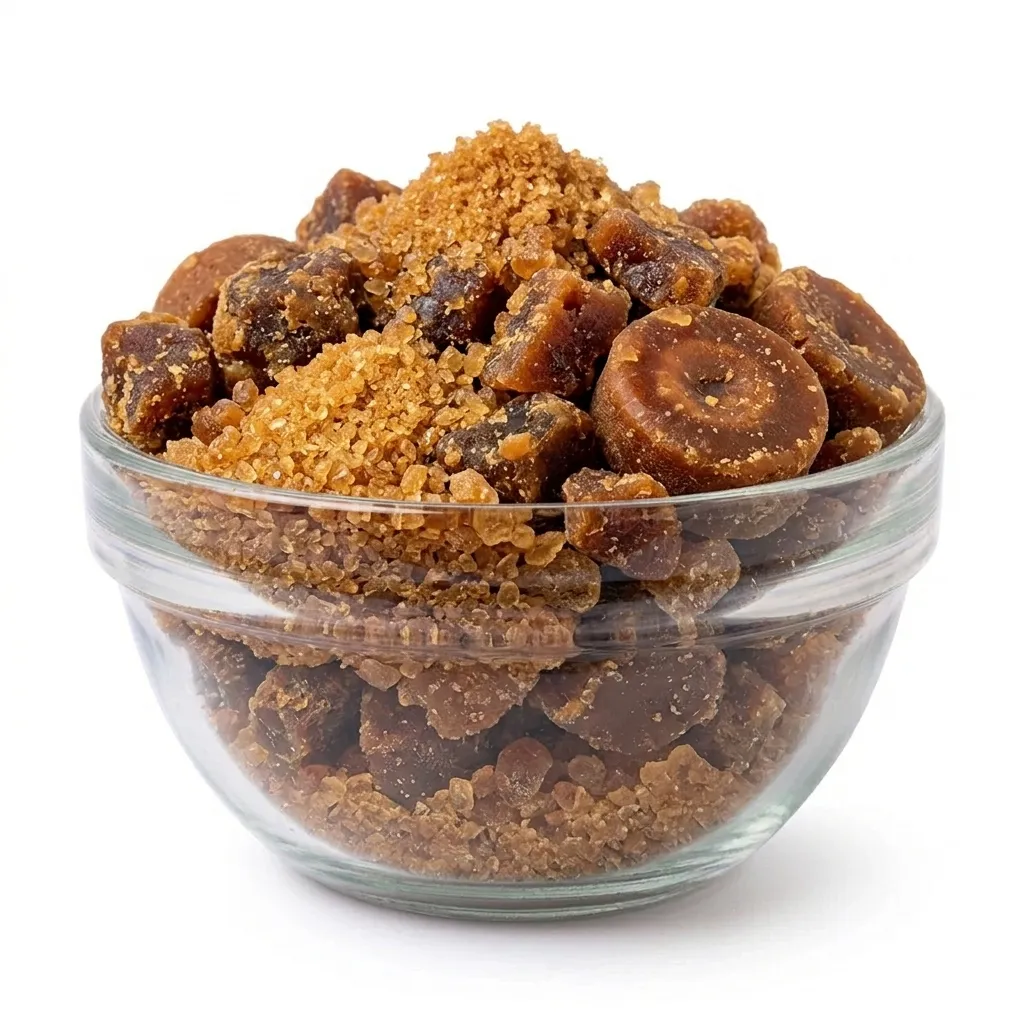
Palm Sugar is a traditional natural sweetener made from the sap of palm trees. It is valued for its distinctive caramel-like flavour, rich sweetness, and versatility in everyday cooking. Palm sugar can be used as an alternative to regular sugar in a variety of food and beverage preparations, adding a traditional touch to your favourite recipes.
Suitable for sweetening tea, coffee, and other beverages.
Ideal for desserts, sweets, and traditional recipes.
A versatile ingredient for everyday cooking.
How to Use: Add to beverages, porridge, desserts, and other recipes according to your preferred level of sweetness.
Storage: Store in a cool, dry place in an airtight container to protect it from moisture.
Balanzing Thought: “Traditional sweetness, natural inspiration, and goodness in every spoonful.”
Note: Palm sugar is still an added sugar and should be consumed in moderation.
Palm Sugar
How can I use Balanzing Palm Sugar in everyday recipes?
Balanzing Palm Sugar can be used to sweeten tea, coffee, payasam, homemade sweets, desserts, and baked goods as an alternative to regular white sugar.
# **Palm Sugar India – SEO Content**
Palm Sugar India represents a traditional natural sweetening ingredient valued for its distinctive taste, traditional food applications, and connection to India’s agricultural heritage. Made by processing the sweet sap collected from different varieties of palm trees, palm sugar offers an alternative to commonly used refined sugar in everyday cooking, baking, beverages, and traditional recipes. Its characteristic caramel-like flavour, natural brown colour, and unrefined composition make it an interesting ingredient for households, food manufacturers, bakeries, confectionery businesses, and speciality food retailers. Unlike conventional white sugar, which undergoes extensive refining to achieve a uniform appearance, palm sugar generally retains more of the natural colour and flavour compounds present in palm sap, depending on the processing method. The production of palm sugar begins with collecting sap from suitable palm flower stalks or inflorescences. The collected liquid is filtered to remove unwanted particles and heated in suitable vessels until its moisture content decreases and the natural sugars become concentrated. Depending on the desired consistency, the concentrated syrup can be cooled into solid blocks, moulded into cakes, or processed into granulated forms. Temperature control, hygienic handling, moisture management, and proper storage are important throughout production because they influence colour, texture, flavour, and shelf life. Different palm varieties can produce sweeteners with slightly different sensory characteristics, making the final product suitable for a range of culinary preferences. The growing interest in traditional ingredients has also increased awareness of Palm Sugar in Andhra Pradesh, where regional food businesses and households can explore its use in sweet preparations, homemade beverages, and traditional desserts. Its rich flavour makes it suitable for recipes that require a deeper sweetness rather than the neutral taste of refined sugar. Palm Sugar in Arunachal Pradesh offers an alternative ingredient for consumers interested in exploring naturally derived sweeteners and incorporating different flavours into home cooking. It can be used in selected bakery preparations, warm beverages, and dessert recipes where its caramel-like notes complement other ingredients. Palm Sugar in Assam can be considered for traditional sweets, rice-based desserts, homemade confectionery, and speciality food preparations. Assam’s diverse food culture creates opportunities to explore ingredients that bring distinctive flavours to familiar recipes. When selecting palm sugar, buyers should examine its colour, aroma, texture, ingredient information, and packaging condition to understand its quality. Palm Sugar in Bihar can be incorporated into household cooking, festive sweets, and small-scale food preparation. Its concentrated sweetness makes it suitable for recipes where a modest quantity can contribute both flavour and colour. For food businesses, consistent product texture and packaging sizes are important considerations when selecting ingredients for repeated production. Palm Sugar in Chhattisgarh provides another option for consumers looking to diversify their sweetener choices. It can be used in homemade laddoos, traditional desserts, sauces, and selected baked products. The flavour profile of palm sugar works particularly well with ingredients such as coconut, sesame, peanuts, cardamom, and dry fruits. Palm Sugar in Goa can complement regional dessert preparations, coconut-based sweets, bakery products, and speciality confectionery. Its natural brown shade and distinctive taste can contribute to recipes that benefit from a richer sweetening ingredient. In commercial kitchens, product consistency, moisture levels, and ease of measurement are useful factors when choosing between block, powdered, and granulated palm sugar. Palm Sugar in Gujarat can be explored for traditional sweet preparations, homemade snacks, bakery applications, and food product development. Its flavour can pair well with roasted nuts, grains, spices, and dairy-based desserts when added using suitable preparation methods. Food manufacturers may also consider its ability to provide sweetness and colour in selected formulations, although recipe testing is necessary before replacing another sweetener. Palm Sugar in Haryana can serve as an ingredient for everyday cooking, homemade sweets, and speciality bakery preparations. Consumers interested in purchasing this product should check whether the packaging clearly identifies palm sugar as the main ingredient rather than assuming that all brown-coloured sugars have the same composition. Palm Sugar in Himachal Pradesh can be used in selected traditional recipes, warm drinks, dessert preparations, and homemade energy snacks. Its concentrated sweetness can complement ingredients such as nuts, seeds, oats, and dried fruits. For recipes involving liquids, the product should be dissolved properly to avoid uneven sweetness or undissolved particles. Palm Sugar in Jharkhand can be incorporated into regional food preparations, confectionery, bakery recipes, and homemade beverages. The product’s flavour makes it suitable for experimenting with traditional ingredients and contemporary recipes. Businesses developing packaged food products should evaluate sweetness intensity, colour changes, moisture absorption, and storage stability before finalising a formulation. Palm Sugar in Karnataka has applications in traditional sweets, festive cooking, beverages, and bakery products. It can be used in selected regional dessert recipes and preparations containing coconut, rice, lentils, and spices. Depending on its physical form, palm sugar may need to be grated, crushed, or dissolved before mixing with other ingredients. Its flavour can also add depth to sauces and sweet fillings used in speciality food products. Palm Sugar in Kerala is particularly relevant to consumers interested in traditional sweeteners and ingredients for homemade food preparation. It can be incorporated into payasam, appam, puttu accompaniments, coconut-based desserts, and selected bakery recipes. Its caramel-like flavour pairs naturally with coconut milk, cardamom, roasted nuts, and rice-based ingredients. Kerala households and food businesses can also explore its use in contemporary desserts, homemade granola, sweet sauces, and speciality confectionery. When purchasing palm sugar, checking the ingredient declaration and choosing packaging that protects the product from moisture can help maintain its original texture and quality. Palm Sugar in Madhya Pradesh can be used in traditional sweets, snack preparations, dessert fillings, and homemade beverages. It provides a distinct sweetening option for consumers who want to experiment with ingredients beyond conventional refined sugar. In commercial food preparation, its colour and flavour should be considered because they may influence the appearance and final taste of the finished product. Palm Sugar in Maharashtra can be included in bakery products, traditional confectionery, homemade sweets, and speciality food formulations. Its ability to dissolve into warm liquids makes it suitable for selected drinks, syrups, and dessert mixtures. Granulated varieties can be convenient for measuring and blending, while solid blocks may be preferred for recipes that involve traditional preparation methods. Food businesses can conduct small-batch trials to determine the correct quantity required for different applications. Palm Sugar in Manipur can be explored as an ingredient for homemade sweets, speciality beverages, and creative food preparations. Consumers can combine it with grains, nuts, seeds, and locally preferred ingredients to develop different flavour combinations. Proper storage in an airtight container is important because unrefined sweeteners can absorb moisture from the surrounding environment, potentially affecting their texture and handling. Palm Sugar in Meghalaya offers opportunities for use in dessert recipes, baked goods, and traditional food preparations where a rich natural sweetness is preferred. Its flavour can complement ingredients such as ginger, coconut, cinnamon, and cardamom. For commercial kitchens, maintaining consistent ingredient measurements helps achieve predictable taste and texture across different batches. Palm Sugar in Mizoram can be incorporated into homemade confectionery, sweet beverages, and selected bakery applications. Its natural brown colour may influence the appearance of finished products, making it important to test the ingredient before using it in recipes that require a lighter colour. Buyers should also review the product label for ingredient composition, net weight, manufacturing details, and recommended storage conditions. Palm Sugar in Nagaland can be used in speciality food preparations, homemade snacks, desserts, and beverages. Its concentrated sweetness makes it suitable for combining with nuts, seeds, fruits, and grain-based ingredients. For food product developers, the choice between powdered and block forms depends on the required mixing process, production equipment, and final product consistency. Palm Sugar in Odisha can be considered for traditional sweets, rice-based desserts, bakery products, and household cooking. Its distinctive flavour can enhance recipes that use coconut, milk, nuts, and aromatic spices. When preparing milk-based dishes, it is advisable to dissolve palm sugar separately and add it after reducing the heat, as acidity and impurities in some unrefined products can affect milk stability. Palm Sugar in Punjab can be used in selected dessert preparations, homemade bakery products, sweetened beverages, and speciality confectionery. It can also be combined with ingredients such as sesame, peanuts, almonds, and whole grains to create different snack variations. Buyers should compare the product’s ingredient declaration, physical condition, and packaging quality instead of relying only on its colour as an indication of authenticity. Palm Sugar in Rajasthan can be explored for traditional food applications, sweet snacks, dessert fillings, and beverage preparation. Its rich taste can complement recipes containing roasted nuts, seeds, and spices. In regions with warmer storage conditions, keeping palm sugar away from direct sunlight, heat, and humidity helps protect its texture and quality. Palm Sugar in Sikkim can be used in homemade desserts, speciality baked products, warm beverages, and creative food combinations. Its distinctive sweetness provides an opportunity to experiment with recipes containing fruits, nuts, cereals, and aromatic ingredients. Food businesses should also consider how the product behaves during heating, cooling, and storage before introducing it into large-scale manufacturing. Palm Sugar in Tamil Nadu has a strong connection with traditional food preparations, particularly recipes that use palmyra-based sweeteners. It can be used in selected regional sweets, herbal drink preparations, rice-based desserts, and homemade confectionery. Its deeper flavour works well with dry ginger, cardamom, coconut, and roasted ingredients. Depending on the source palm and production process, the product may have variations in colour, firmness, and sweetness. These natural differences make ingredient identification and product specifications important when purchasing for household or commercial use. Palm Sugar in Telangana can be incorporated into traditional desserts, bakery products, homemade snacks, and speciality beverages. Its versatility allows food businesses to experiment with different formulations while retaining a recognisable caramel-like flavour. For recipes that require accurate sweetness levels, manufacturers should conduct controlled trials because the moisture content and concentration of different palm sugar varieties may vary. Palm Sugar in Tripura can be explored for confectionery, homemade sweets, and food preparations that combine traditional ingredients with contemporary cooking methods. It can also be used in selected sauces and dessert toppings where its natural brown colour adds visual depth. Proper sealing after opening helps reduce exposure to air and moisture, supporting better product handling during regular use. Palm Sugar in Uttar Pradesh can be used in traditional sweets, bakery preparations, festive recipes, and household beverages. Its concentrated sweetness makes it suitable for different culinary applications, including sweet fillings, sauces, and grain-based desserts. Businesses purchasing this ingredient should consider the intended application, product form, packaging size, and consistency between batches. Palm Sugar in Uttarakhand can complement homemade desserts, warm beverages, bakery products, and speciality food preparations. It can be paired with nuts, dried fruits, cereals, and aromatic spices to create different flavour combinations. For consumers who prefer less processed food ingredients, understanding the difference between pure palm sugar, blended sweeteners, and other forms of jaggery is an important part of making an informed purchasing decision. Palm Sugar in West Bengal can be used in traditional sweets, rice puddings, dessert fillings, and bakery applications. Its distinctive flavour can contribute to seasonal and festive recipes, particularly preparations that benefit from a rich caramel-like sweetness. The product can be available in different forms, including solid cakes, blocks, liquid syrup, and granulated varieties, depending on the manufacturing process and intended use. Beyond its regional culinary applications, palm sugar also offers several practical considerations for food businesses developing new products. Its flavour profile can influence the overall sensory experience of confectionery, cookies, cakes, breakfast mixes, dessert sauces, and beverage concentrates. However, palm sugar should not automatically be considered a one-to-one nutritional replacement for white sugar. Although less refined varieties may retain small amounts of naturally occurring minerals, palm sugar remains a source of carbohydrates and added sugars, and its nutritional composition varies according to the palm species and processing method. It should therefore be consumed in moderation as part of a balanced diet rather than marketed as a treatment for health conditions or a sugar-free alternative. For buyers evaluating product quality, important factors include botanical source, ingredient purity, manufacturing hygiene, moisture content, texture, colour, aroma, packaging integrity, and traceability. A clearly labelled product helps buyers understand what they are purchasing and whether it is appropriate for their intended application. Food businesses should also review applicable food safety requirements, batch information, and storage recommendations before incorporating palm sugar into commercial production. Selecting a suitable product involves more than comparing prices because differences in processing and physical form can influence usability, flavour, and finished product quality. As consumer interest in traditional ingredients continues to develop, palm sugar offers an opportunity to connect regional food traditions with modern cooking and food innovation. Whether used in everyday household recipes, speciality desserts, bakery formulations, or packaged food development, it provides a distinctive sweetening ingredient with a strong connection to palm-based agricultural resources. Exploring Palm Sugar India through its different regional applications helps consumers and food businesses understand its culinary versatility, product characteristics, and practical uses while making informed choices based on ingredient transparency and quality.
I bought Palm Sugar from Balanzing and really liked its taste. It has a lovely natural sweetness and works well in my tea and homemade sweets. Happy with the purchase!


user –
I bought Palm Sugar from Balanzing and really liked its taste. It has a lovely natural sweetness and works well in my tea and homemade sweets. Happy with the purchase!